Tuesday, December 11, 2012

The profound Fraxinus


Species name: Fraxinus profunda

Common name: Pumpkin ash

Location: Ontario

The native range of the pumpkin ash is predominantly in the United States, stretching along the eastern seaboard from Virginia down south to Georgia. There are also isolated populations in Florida, Nebraska, Indiana and Illinois, and very recently there have been a few individuals found in southern Ontario. Normally when you find only a few of a single species the determination of "native plant" is not usually made, but these individuals are growing in old growth forests that have been undisturbed for centuries; the chances of these trees having been planted there as ornamentals is slim to nil. The pumpkin ash is also very rarely used as an ornamental species this far north, so the chances of those trees growing there naturally is quite high. The native range of the pumpkin ash is now highly fragmented, with isolated populations occurring along the coast and very little in the interior due to habitat loss. While this species isn't officially listed as threatened or endangered on any Species At Risk list, the chances of this happening is high unless we start planting more of them. They are by far the largest of the ash species and grow quite quickly at first, so they are great shade plants. They also like swampy areas and so are great alternatives for areas that are prone to flooding.

As for uses of this tree to humans other than ornamental use, I can't think of any. That doesn't mean they are "useless"; many insect species feed on the pumpkin ash, and there are some species of butterfly that lay their eggs exclusively on pumpkin ash leaves for their larvae to feed on once they hatch. Unfortunately, the pumpkin ash is incredibly sensitive to the emerald ash borer since the bark is much thinner than other species; this widespread non-native pest is now helping to contribute to the population decline. Unlike the white ash, there don't seem to be any individual trees that are less susceptible or even resistant to infection, so unless we develop some sort of pesticide to use on these trees they will likely all be lost.

Saturday, December 8, 2012

A Northern coffee relative


Species name: Cephalanthus occidentalis

Common name: buttonbush

Location: Ontario

Buttonbush is a native plant to North America from southern Ontario all the way south to Mexico. There are two, perhaps three, clear distinct populations of buttonbush. One population occupies a range extending almost completely down the eastern seaboard of North America, from Ontario east to Nova Scotia all the way south to Texas and east to Florida. A second population occupies the fragment of the native range in Mexico (these two populations don't overlap in area, but can very easily still interbreed). A third population exists to the west of the Rocky Mountains in California. The fact that the native range is now so fragmented suggests this species was at one point much more abundant than it now is. It also suggests that those two populations (the Mexico/eastern North America population and the California population) are now undergoing the process of speciation because of the huge geographic distance that is between them.

My blog readers in warmer climates (or those who have been to warmer climates and have gone out and appreciated some of the local species grown for agricultural purposes; Ethiopia, Colombia, Peru, Ecuador, Jamaica, Cuba, Dominican, Mexico, Venezuela, South Africa...) might recognize some features of this plant while finding others completely foreign and not looking like they belong (a somewhat similar story to the oak-leaved hydrangea, which you can read all about HERE). The leaves of this plant look strangely similar to those of the coffee tree, while the flowers (and later, the fruit) look completely different. Well, you're on the right track! This is one of the northernmost species of the Rubiaceae, or the coffee family. Other important species in this family are the madder plant (a very important plant in the natural dye industry; the dye obtained from the madder plant is a brilliant red), cinchona (important for the alkaloid extract quinine, important in the treatment and prevention of malaria), and woodruff (important in the production of coumarin, and profiled on my blog HERE).

Like many native North American plants, the buttonbush has a historical medicinal use for Native North Americans. The bark of the plant was used like a tea (and sometimes chewed when it was young and fresh) to treat diarrhea, rheumatism, headache, fever, toothaches, and (of all things) venereal disease. Whether or not it is medicinally valuable against many of these conditions remains to be seen, but it is useful on the skin to relieve itch and various skin rashes. One of the types of rashes that it is most effective against is the skin rash associated with an allergy to the essential oils of the poison ivy plant. Conveniently enough, where the buttonbush is most common is where there is usually a high density of poison ivy plants. It's nice that natural remedies to some of nature's most toxic plants grow right beside the offenders!

Most medicinal effects this plant may or may not have have been abandoned since this plant is actually quite toxic. It contains a chemical called cephalathin, which causes vomiting and, in severe cases, can cause convulsions and paralysis. Consumption of this plant is highly discouraged, even though many other species rely on it for food (birds, bees, deer, rabbits, waterfowl, and shore birds).

Friday, December 7, 2012

One of the four bush honeysuckles


Species name: Diervilla lonicera

Common name: northern bush honeysuckle

Location: Ontario

The northern bush honeysuckle is native to North America, from southern Canada all the way south to about Indiana. Due to land use change, it has become critically endangered in Indiana, and is on the state of Tennessee's list of endangered or threatened species. No other American states or Canadian provinces/territories have it on any kind of species red list, but I can say for certainty that I have never seen this plant in its natural habitat, only in cultivation. Whether that means I'm just not looking hard enough or in the right spots (woodlands, mostly, where it serves as shrubby ground cover), or whether the population numbers should be reevaluated for species status I don't know. I'm guessing that due to habitat loss, the population numbers of this species are declining. How rapidly and whether it's enough to put the species at risk I couldn't say.

Both species of the bush honeysuckle, different from the real bush honeysuckle (Lonicera maackii), are used extensively in herbal medicine and are slowly making their way into modern western medicine. Extracts from the leaves and young shoots have soothing effects on mucous membranes, and drinking a tea made from these plant parts has been shown in clinical studies to be just as effective at soothing sore throats and preventing coughing fits as any cough medicine on the market. Granted, cough medicines in general are just as much a "placebo science" as they are actual medicine; a very recent study (last year) showed that people who believe they are taking cough medicine but are really just consuming sugar water, something that should actually exacerbate a sore throat and cough rather than soothe it, are just as likely to report a lessening of their symptoms as those taking real cough medicine.

Going out into the wild (or even a back yard) and picking honeysuckles to turn into a soothing tea can be incredibly dangerous, and a perfect example of why you need to be absolutely sure of the identification of a plant before you consume it. Most honeysuckles look dangerously alike, and can only be distinguished through microscopic analysis. Some species are deadly toxic, while others have reported medicinal value. If you are at all unsure of the identification of a plant, don't put it in your mouth!

Thursday, December 6, 2012

A Frankenplant or the real thing?


Species name: Hydrangea quercifolia

Common name: oak-leaved hydrangea

Location: Ontario

Those of you who have never seen this plant before probably looked at the leaves and thought "hey! I recognize those! That's an oak!" and then looked at the next two photos and thought "gee, she's awfully good at photoshop. Those leaves and flowers don't belong together!" Well, you would have been in good company in that boat of confusion; when I first saw this plant a couple of years ago I thought someone had created a Frankenplant by grafting two completely different species together (which is possible, but usually they're at least in the same or closely related families. Hydrangeas and oaks are nothing alike, and don't share a recent ancestor). The oak-leaved hydrangea is a real plant, "created" as a product of evolution and natural selection, not garden novelty and artificial selection. It is native to North America as far north as Tennessee and as far south as Florida, from the eastern seaboard all the way west to about Louisiana. It can grow quite happily in southern Canada despite our cold winters as long as it is either drastically cut back in the spring to prune off all the dead growth (the winter will kill any overwintering buds; most of the new growth comes from the rootstock in Canada), or planting it in a very sheltered area from the harsh winds and the weight of the snow. Building a "burlap teepee" to put over the plant to protect it during the winter would be a good thing if you plan on keeping it around for a while; if not just a good hard prune in the spring and you'll be good to go. Just don't expect many flowers since those only grow off of at least one years' growth.

The oak-leaved hydrangea is a perfect example of phenotypic plasticity; that is, a plant's ability to modify its appearance based on environmental conditions. Often, this is a slow process involving changing growth patterns over weeks or even months, but in the oak-leaved hydrangea during peak growth times it can be in as little as hours. During times of drought, the plant actually has the ability to reabsorb nutrients from its flowers to put back into the leaves and sustain its basic life functions: making sugars from water and carbon dioxide, then breaking down that sugar again into energy. The flower buds will look completely healthy, but if the plant is experiencing a prolonged drought then all of a sudden it seems like the buds are withering and they turn brown. Those buds will never develop into flowers, but if you give the plant a good watering as soon as you notice it, new ones might form if you're lucky. The plant can also modify the appearance of its leaves; after a prolonged drought the leaves will be more prominently lobed with less leaf area. If the growing conditions are ideal, then the leaves will be much fuller with more tissue between the main veins. You can almost think of it like the difference between a pin oak leaf (which you can see HERE) and a white oak leaf (which you can see HERE). A pretty drastic change!

Monday, December 3, 2012

The tree of anything-but-heaven


Species name: Ailanthus altissima

Common name: Tree of Heaven

Location: Ontario

Unfortunately, there are a couple pretty impressive specimens of the Tree of Heaven on campus, and this is only going to lead to disaster in a few years. The Tree of Heaven is a highly invasive species in North America, spreading underground via rhizomes and producing suckers that grow quite vigorously and grow in girth very quickly. This can not only be a menace to lawnmowers if this plant is in a decorative location, but they harbour a nasty secret underground. The Tree of Heaven produces some of the most toxic natural herbicides known, which successfully kill off any vegetation growing near them. While they don't seem to produce these chemicals in great numbers directly around their root system (other plants that aren't grasses can live happily in their shade if they are shade tolerant), they are produced in large amounts from the rhizomes to protect the developing suckers. This double-whammy of colonization and making the soil toxic to other organisms allows for their success at complete dominance over an ecosystem. They also thrive in disturbed areas where other species are slow to establish, also contributing to their success as an invasive species.

If you needed another reason not to plant this tree, it reeks. And I mean it smells TERRIBLE. The Chinese (the tree is native to China) even have their own traditional name for the tree: chouchun. Roughly translated, this means "malodorous tree." Other English names for this tree is the ghetto palm (not entirely sure how it got this name, but I kind of like it...) and the stinking tree. The odor probably has to do with the allelopathic compounds produced from the rhizomes; the suckers are especially disgusting after being "decapitated" with a lawnmower. It's almost enough to make you not want to go outside for fear of being drowned in their stench. On the bright side, this tree rarely lives past 50 years, so if you've got one in your yard you might want to remove it before it falls on your house.

Despite the incredibly foul smell produced from these trees, they are incredibly important in Traditional Chinese Medicine, where almost the entire plant is used for various purposes. A word of warning; this plant is toxic to humans as well as all other animal life so extreme caution should be exerted should you decide to go the TCM route. The bark is made into an astringent to treat a wide variety of diseases and disorders, from intestinal hemorrhaging to dysentery. There is also a significant amount of chemicals that are similar to quinones in the bark, and quinone is the most important antimalarial drug in the world. The drug-resistant malaria (or multi-drug resistant malaria) seems to still show strong effects of susceptibility to the ailanthone in the bark of the Tree of Heaven, and so is now a recognized antimalarial drug. The fruit of the tree when made into a tincture that effectively treats a vaginal infection called trichomoniasis, an infection caused by a protozoan that can be very difficult to treat. It is now the leading treatment for the infection by both doctors practicing Traditional Chinese Medicine and by doctors practicing Western medicine. It has also been suggested that this same medication will also have some effect on cancerous cells, but this has never been substantiated with clinical evidence. Extracts from the tree also have very potent anti-inflammatory effects, and have been shown to be incredibly effective at resolving severe allergic reactions (known as anaphylaxis).

Thursday, November 29, 2012

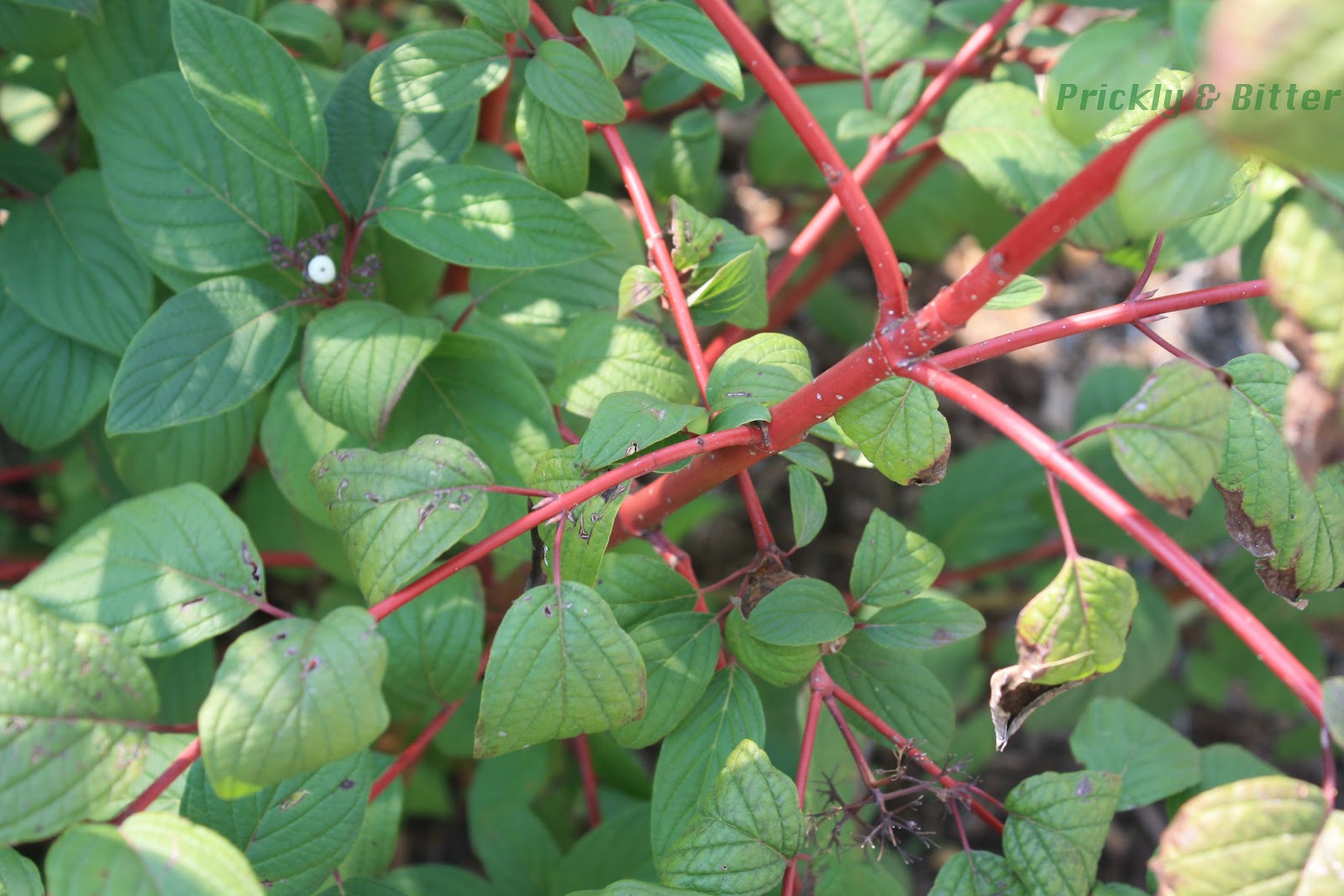
The (red) osier dogwood


Species name: Cornus sericea

Common name: red-stemmed dogwood, red osier dogwood

Location: Ontario

The red-stemmed dogwood is native to North America, from Alaska on south to Michigan and Nebraska. It thrives in very cold temperatures, and has a spectacular look during the winter due to its bright red stems. A hard prune of this shrub will keep it shrubby (it will absolutely grow into a small tree up to 4 meters tall if you leave it alone), but the flowers only appear on new growth so you likely won't get any of the pretty white berries. In cultivated areas this plant seems to get a little out of control, but this isn't indicative of how it grows in the wild; you rarely see a patch of osier dogwoods that have out-competed all other species. The shrub is shade-tolerant (one of the reasons why it is so successful as an understory shrub), but requires direct sunlight in order to have bright red branches.

One of the most attractive characters of this shrub is the underground root network that can survive under periods of intense flooding. For this reason, the osier dogwood is one of the most popular plants to plant along riverbanks to prevent erosion. The roots grow very quickly and very densely to hold the soil in, and since it's a native plant it works well with the other native flora.

The berries have a reported medical use in stopping bleeding, but that use hasn't ever been substantiated with clinical evidence. The Lakota use the inner bark of the shrub as a "traditional tobacco," mixing it with barberry leaves to improve the flavour. Other than creating smoke that can be inhaled, I'm not sure what kind of effects this traditional tobacco has; there aren't any reports of the plant being toxic, stimulating or hallucinogenic to humans in any way, so I can't imagine what kind of result inhaling the smoke would have. And if other leaves need to be added to improve taste, I can't imagine it being very pleasant, either!

Tuesday, November 27, 2012

One of the Austrian pines


Species name: Pinus nigra

Common name: Austrian pine, European black pine

Location: Ontario

The Austrian pine is native to Europe, in countries surrounding the Mediterranean and Baltic Seas. There are actually two subspecies of the Austrian pine which rarely interbreed (but are still capable of forming hybrids in a very small overlapping zone as well as when they are brought together under artificial conditions like a greenhouse): the western subspecies existing in southern Italy, southern Spain, southern France and North Africa and the eastern subspecies in Austria, central Italy and Turkey. The needles of the two subspecies are quite different and you can easily tell them apart when side-by-side; the needles of the eastern subspecies are much fatter and much more rigid than the western subspecies. They both have different liveable temperature ranges, too, with the eastern subspecies being able to tolerate much colder minimum temperatures (down to -40 degrees Celsius with no adverse effects) compared to the western subspecies (only about -25 degrees Celsius or so). I believe the subspecies on campus would be the eastern subspecies, P. nigra subsp. nigra.

One major attractive feature that probably led to its widespread planting across Europe and North America is that it is a very fast growing tree, relative to other needle-bearing trees. It was originally thought to be an excellent lumber tree, so it was planted in large numbers in North America. Unfortunately, the grain of the wood is very rough and quite variable across the height of the tree, so making long boards suitable for building is not feasible. It was turned to as a major source of pulp and fibres for making paper, as a fuel source, and is still used as a low-grade wood for some construction purposes.

Unfortunately, as with most plant species that have been transported out of their native range, the Austrian pine has a dirty secret. That secret is a fungus. The "red band needle blight disease", caused by the fungus Dothistroma septosporum, is especially toxic to North American Austrian pine trees because of their inability to breed properly here. Austrian pines have a hard time cross-breeding outside of their native ranges, and the seeds that are self-fertilized are much less likely to germinate. This causes something called "inbreeding depression," which can lead to a buildup of genes that make a tree (this happens in animals, too) more susceptible to a pathogen. The North American trees are very susceptible to this pathogen, and it is an almost certainty that every single Austrian pine tree in North America will succumb to this disease. There is no known treatment once a tree is infected other than cutting it down and burning the residues (especially the needles, where the pathogen is housed in the living tree). Planting this tree, even as an ornamental, is strongly discouraged and planting this tree in continuous stands is not only strongly discouraged, but carries quite a hefty fine if you're caught doing it in many states in the United States (but no provinces in Canada yet). You can see that the tree in the top picture is looking very unhealthy; it is likely showing the first signs of infection from the disease.

Friday, November 23, 2012

The noxious cow itch vine


Species name: Campsis radicans

Common name: cow itch vine, trumpet vine

Location: Ontario

The trumpet vine is native to the southeastern United States, reaching as far north as Kentucky. Despite this, it is incredibly cold-hardy, and can survive winter temperatures as cold as -30 degrees Celsius. For a subtropical species, that feat in itself is incredible. What's even more incredible is that it actually does better when transported to "strongly temperate" areas (locations that have a clear summer that is very warm, and a clear winter that is very cold) like New England and southwestern Ontario. There, the vine becomes incredibly invasive and can be very destructive. In fact, "radical pruning" is recommended in order to control its growth; it can grow up to 30 meters in one growing season!

This plant is one of the many vines that produce structures called tendrils that act almost like support beams that help keep the plant upright and attached to its substrate, whatever that might be. The plant that made tendrils famous is the garden pea plant, which has tendrils that react so quickly to touch you can almost watch them grow without a time lapse camera! The cow itch vine takes this to a whole new level. It can actually use its tendrils almost like hole borers, and can penetrate into mortar between bricks, and can split apart perfectly healthy trees. Nevermind what it can do to hydro or telephone poles! Outside its native range it truly is a menace, and should be avoided at all costs (despite its incredible beauty). The one good thing about this plant is its flowers; the bright red colour and the trumpet-like shape attracts every species of hummingbird to have ever come in contact with it, so if you'd like some great hummingbird viewings on warm winter days, go find some other poor gardener that planted this vine and camp out in their yard with a camera. The flowers are so prolific in nectar that the birds are very likely to "put on a show" for you while you just sit and snap pictures!

Thursday, November 22, 2012

Mom's Secret Recipe

Today I decided to do something completely different on my blog, because...well, because I can! It's my blog, I can do what I want :)

I was having a hard time coming up with another plant that screamed "Thanksgiving," since today is American Thanksgiving. I've already done two different species of pumpkins, and the only other suitable plant to blog about would be sweet potatoes...and those are a kettle of fish I was planning on getting into next year. So what other plant could I possibly blog about? There's no other typical vegetable of Thanksgiving that is universal to all celebrations, no matter where in the country you are. But then Aniruddho, a colleague in the Biology Department, gave me a fabulous idea: why not blog about a recipe instead? Brilliant! So that's exactly what I'm going to do. Thanks, Ani!

I'm going to feature my absolute favourite part of Thanksgiving, and Christmas dinner: stuffing! I'm about to give away my mom's secret recipe (sorry mom!), so get your pens ready. Ready? Here it is:

My Mom's Famous Stuffing Recipe:
- bread (enough to stuff a turkey of your choice)
- water (enough to dampen the bread, but not make it soggy)
- onion (you like onion? Add a lot! Don't like onion? Add a little!)
- ground sage (see comments for onion, above)
- ground poultry seasoning (see comments for onion, above)
- love (don't have love on hand? Steal some from someone else!)

Steps: 
1. Tear up the bread by hand. Do it the way of the pilgrims. Food processors are the easy way out. Leave it chunky, don't make bread crumbs.
2. Chop up the onion. Dice it relatively finely, but not so fine it turns to mush when it starts cooking.
3. Put bread and onion in a giant bowl. Dump in your herbs.
4. Add in a little bit of water, and here's where your love comes in handy. Make sure your hands are clean, and mix that by hand. Mix, mix, mix. Still feels dry? Add a bit more water. Mix, mix mix. Still feels dry? Keep adding water and mixing until it's the desired consistency. Not soggy, but the bread sticks together with the mixture when you squish it into a ball. Feel free to make shapes here. I suggest snowmen. Use baby carrots as the nose. Take pictures!
5. Once you've got your desired consistency of stuffing, stuff it into your bird and enjoy the smell while it cooks.

Now you must be sworn to secrecy never to tell anyone how to do it! The bright side of giving away my mom's "secret" recipe is that NO ONE has been able to reproduce how it tastes. Trust me. That love? That's the secret ingredient. Each person's love tastes just a little bit different. And perhaps hand lotion...

So how on earth can I turn this into a blog? Well, there are three clear species here that can be featured in this blog, each of which I'll do in a mini-blog: wheat, onion, and sage. Here we go!


A field of genetically modified wheat to resist fungal infections (Science Centric)

Wheat fruits, called a caryopsis (Flashcard Machine)

Species name: Triticum aestivum

Common name: bread wheat

Location: See above for internet sources; a common, non-native species

Wheat is native to the Middle East, in a region known as the Fertile Crescent and was first thought to be domesticated almost 11,000 years ago. This is a region of the Middle East from which we get many of our most important crops in North America. There are actually  more than 20 species of wheat, each of which are used for different purposes. The most common way that species of wheat have been "created" over the last few millenia is through spontaneous tetraploidy. This means that the plants have undergone some sort of cell division problem that has caused all of the DNA of the plant to go into one pollen grain and none in the other, instead of half of the DNA going into each pollen grain. One of these pollen grains comes into contact with an egg that has done this same thing, and now an embryo exists with the complete genome of its mother plant and father plant (and sometimes this is actually the same individual; this is called "selfing"). If this happened in humans or almost any other animal, the embryo would not be viable. In plants, however, this is incredibly common and probably the most common method of creating new species of plants. This is a pretty remarkable adaptation, too; think about how much genetic variation could be available to an organism containing four copies of each gene instead of only two! The expression rare recessive diseases would essentially be eliminated from the population. Some common wheat species that we use are the diploid T. aestivum which is mainly used for flour that goes into breads and cakes; T. durum (tetraploid), used for making pasta and couscous, is low in gluten; T. dicoccum (diploid), also known as emmer, is used for breadmaking in Egypt and some parts of Europe; and T. spelta (hexaploid), an ancient form of wheat (popular during the Middle Ages) still used now as a low-gluten equivalent to bread wheat.


Onions with their green leaves still attached (Illinois Vegetable Garden Guide)

Some different varieties of onions (Garden of Eaden)

Species name: Allium cepa

Common name: onion

Location: See above for internet sources; a common, non-native species

Onions are probably native to Central Asia, but there is much uncertainty about where they originated. Onions as a species are only known from cultivation, which is incredibly unusual as far as crop plants go. It is possible that it has gone through so many rounds of human selection that it is now genetically distinct from its ancestral species (the most likely explanation), or the ancestral species has now gone extinct (the unlikely explanation). There is one species, A. asarense from Iran, that is genetically very closely related to the common onion. All species of the genus Allium produce sulphur compounds, which give them their pungent smell. When these sulphur compounds come into contact with water they produce sulphuric acid, one of the most potent acids known. This is the chemical basis for the "IT BURNS MY EYES!!!!" reaction most people get when cutting onions. The easiest way to get rid of this effect is by refrigerating your onions before use, or putting them briefly in the freezer before chopping (just enough to make them cold, not frozen). This prevents the cut onion from being able to "bleed" as much as a non-refrigerated onion, contributing to less eye-burn. Also, make sure you wash your hands with soap before rubbing your eyes. Some people say plugging your nose also helps; I think it's more the silliness factor than anything else. The sulphur compounds are still becoming airborne and the mucous membranes of your eyes still contain a lot of water, so the chemical reaction cannot be modified by plugging your nose. I would contribute that to the placebo effect more than anything else. These sulphur compounds in onions (and garlic) have been exploited medicinally by humans for centuries. Yes, onions do have medicinal properties! They are very potent against bacteria and fungi, and so are popular for treating colds, the flu, and, of all things, Athlete's Foot. If you suffer from this (quite disgusting) fungal infection on your toenails, put some freshly chopped warm onions in a pot of warm water. Submerge your feet for a while, rinse, and pat dry. Fungi are incredibly intolerant to sulphur, so this should take care of them in a jiffy. In fact, many creams for Athlete's Foot exploit the natural sulphur-containing chemicals of onions!


The sage plant (GroAction.com)

Sage flowers (Soulistic Wellness)

Species name: Salvia officinalis

Common name: garden sage

Location: See above for internet sources; a common, non-native species

Sage is one of the most popular seasonings in the world, let alone in North America. The sage plant is native to the Mediterranean Region of Europe and Africa, where it still grows commonly in the wild. In North America it has the potential to become an invasive species in warmer climates, so just be careful if you plant it outside. It doesn't seem to tolerate Canadian winters well, or if it does it rarely spreads beyond where it was originally planted. The flower is incredibly characteristic of the mint family; it is purple, has a darker eyespot than the rest of the flower, the male and female parts of the flower overhang the bottom petal of the flower, and features a large bottom petal that can act as a "landing pad" for bees for pollination. This flower is very specialized for pollination by insects that can see ultraviolet light, and the reproductive parts have been modified to ensure that pollen gets onto that "secret spot" on the back of the bee's neck where it cannot access the pollen to groom it off of itself mid-flight. Bees actually love being covered in pollen by flowers not because they enjoy pollinating flowers, but because they pack this onto specialized areas on their legs to take back to the hive to feed the young larvae. Without the ability to put pollen onto the back of a bee's neck, the flower will be incredibly inefficient at cross-pollination, and will essentially be giving away its sperm to be used as bee food. Some biologists argue that bees are the most inefficient pollinators in the world! Sage also has some demonstrated health benefits and medicinal uses, although it is reported as being able to treat much more than it has actually been shown to do. One of the most promising uses of sage leaf extract (containing a combination of a huge number of essential oils; the exact combination of different chemicals has never successfully been created in a lab) is as a treatment for hyperlipidemia, or an increased level of lipids in the blood. This isn't just equivalent to obesity; in fact, obese people are incredibly efficient at filtering fats out of their blood and storing them in fat tissues (hence the obesity). This is more a result of a vast variety of genetic diseases that cause, sometimes for unknown reasons, lipids to build up in the blood. Other times it can be acquired due to various other medical conditions, the two most common being diabetes and renal failure. Chronic high levels of lipids in the blood can be incredibly dangerous to the circulatory system because it changes the viscosity of the blood, causing the heart to work harder. This can lead to different kinds of heart disease, heart attack, and stroke.

Happy Thanksgiving to all my American readers!

Gobble Gobble (not a plant)

Tuesday, November 20, 2012

The Japanese can't make their own taxol from their yew


Species name: Taxus cuspidata

Common name: Japanese yew

Location: Ontario

You might be wondering why I'm featuring the same plant twice in the same week, but you would have made one vital assumption that is incorrect: just because two species look the same doesn't mean they are the same. The Japanese yew, featured here (native to Japan, as you might have guessed), is a very close relative to the Canada yew, featured in my blog post on Monday (read all about it HERE). In fact, by assuming that the photos above represented the same species as that of the Canada yew, you would be making the same error that many botanists have made in the past; it was only recently demonstrated that there are distinct species within the genus Taxus. The genus was originally thought to be monotypic, and instead having distinct geographic races or subspecies that are on their way to becoming their own species, but have not yet become distinct enough to warrant the title. The Sumatran and the Mexican yews are the most different from the type species, the European yew. These were the first to obtain their own species designation, with every other species following suit and being confirmed through DNA sequencing.

So if these species are so morphologically similar, how do you tell them apart? Well, the needles and their arrangement on the branches is the first clue. The needles of the Canada yew are arranged around the branches when young, but the development of the bark on the branches almost flattens out the arrangement of the needles as it matures. If you look at the branches that are brown in colour instead of green (showing that bark has been formed), the needles are in two rows on each side, but are flattened on the branch. It has almost become two-dimensional. The difference in the maturation of the Japanese yew branches is that the needles remain spirally-arranged on the branch; they never flatten out unless something has been grazing the branches. With age, the needles also turn upwards, so all of the oldest needles on the inside of the shrub or small tree are pointing upwards, even though their point of attachment on the branch is all the way around it.

The second hint that these are different species is their sheer size difference. The Canada yew barely reaches a height of 2 meters off the ground and completely lacks a central stem. While the Japanese yew pictured above doesn't really look like it has a central stem, it is clearly more "tree-like", and the branches have the ability to support their own weight as opposed to drooping onto the ground like the Canada yew branches do. The Japanese yew can also grow to a maximum height of 18 meters.

The last major differences are not visible to the eye, but rather "visible" to a machine called a gas chromatography mass spectrophotometer, or GCMS. These machines are also sometimes called the "mass spec," and if you watch CSI at all you will have heard of them! They really do exist, and they are used in much the same way as suggested on TV (but not nearly as quickly, and the results are a bit harder to interpret than what the shows make them out to be!). You dissolve a bit of an unknown substance into a solvent (usually some sort of alcohol, although other organic solutions are sometimes used like chloroform), and inject a very small quantity into the machine. The machine separates the individual components of the liquid mixture by molecular size, and displays a graph of molecular weight versus abundance. The shape of the peak tells you what types of chemical bonds are present, and the location along the size axis tell you how big the molecules are. The height of the peaks tell you how much of any given substance are present. So what does this have to do with the Japanese yew? Well, it's a rather unfortunate tale for the Japanese; if they want to make their own paclitaxel, they're going to have to start planting Canada yew. The Japanese yew doesn't contain the right combination of taxanes to have the desired medical effects. In fact, the Japanese yew is exponentially more toxic than the Canada yew; it has the distinction of being the "Japanese horse killer." Just five needles are enough to kill a small dog. If you choose to plant this ornamental tree in your garden, please keep animals and small children away from it! And don't EVER use it as a Christmas tree!

Monday, November 19, 2012

An orange crabapple bush?


Species name: Pyracantha angustifolia

Common name: Narrowleaf firethorn

Location: Ontario

This species of firethorn (there are recognized 7 species in the genus and many varieties) is native to China, but popular throughout Europe and North America as an ornamental plant. It can tolerate the cold just enough where I am in Ontario, but not much further north since it doesn't do well in harsh winter climates. It can tolerate quite hot and arid areas, so does well in more tropical climates. It has become so invasive in areas of Hawaii that it threatens to completely eliminate native diversity. The only plant that manages to out-compete firethorns for resources in Canada is Madagascar periwinkle (which you can read all about HERE); not even English ivy can match its vigor (which you can read all about HERE).

If you look at the berries of the firethorn plant, you might think you've seen them somewhere before but a different colour. You would be correct! Like the crabapple (read all about it HERE), the firethorn is also in the rose family and has very similar, but smaller, fruit. They have that characteristic star-shape at the bottom of the fruit, which is also visible in apple fruits (also in the rose family!). This is characteristic of the type of fruit called a pome, and mimics the same star-shape that you see when you cut an apple in half cross-wise. And who hasn't cut an apple in half to reveal the star for apple-stamp painting when they were in daycare?! If you've never had the chance to do this, you're seriously missing out. And while you're at it, cut a potato in half and make a shape, and use that as a stamp, too. I miss these kitchen crafts...

Firethorn bushes are very important to wildlife in their native range, but not the primary food source of any animal in North America. The fruits are very bitter, so even birds would rather find something else to eat. They do obviously eat them, though, since they are the main vector of dispersal of the seeds. In order for a plant to become invasive, it must be reproducing successfully! Unlike its relative the scarlet firethorn, the fruit should never be consumed by humans (even after cooking) because they contain high levels of hydrogen cyannide.