Showing posts with label mezcal. Show all posts

Wednesday, August 7, 2013

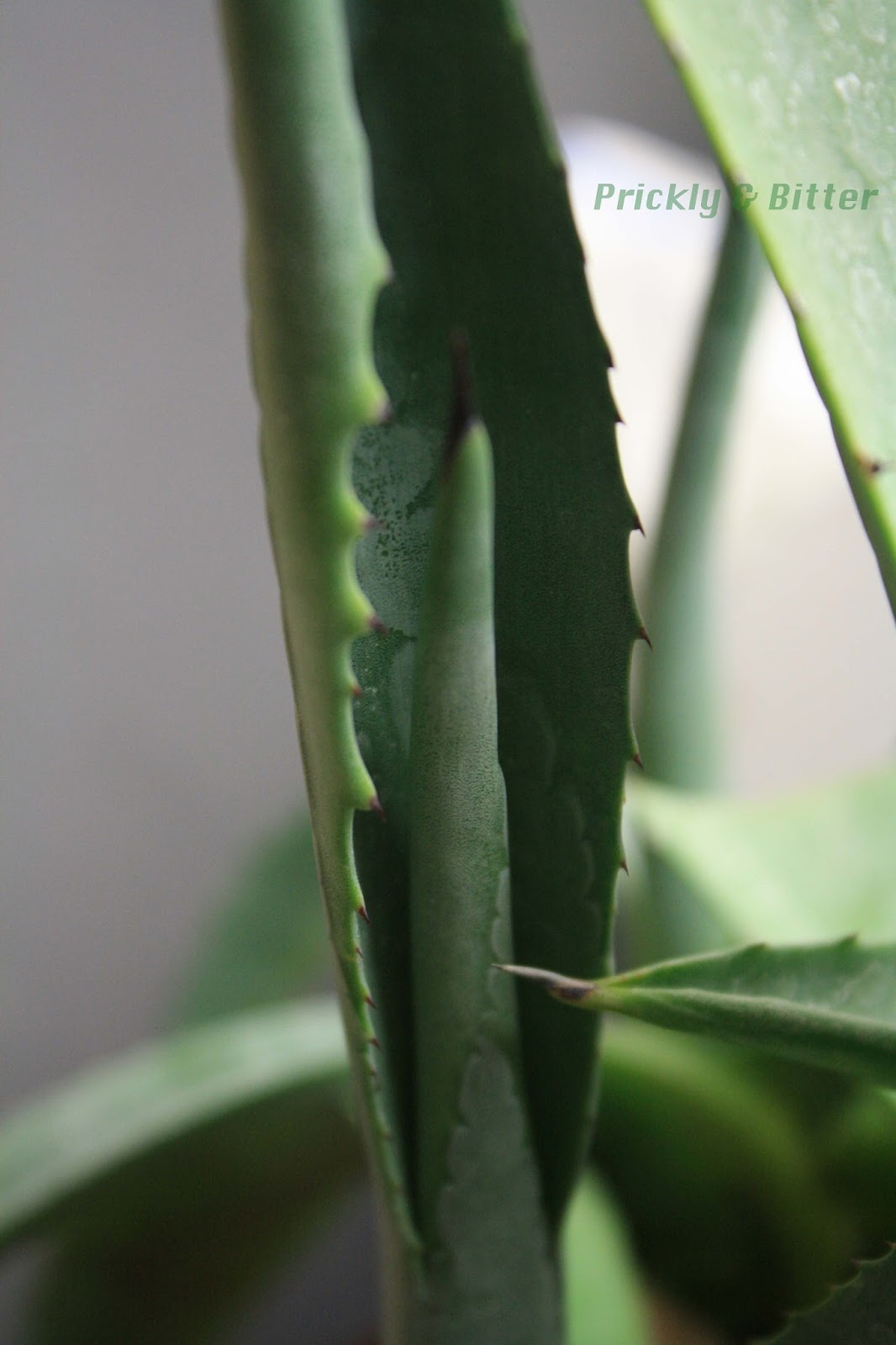
Sisal here, sisal there, everywhere a sisal sisal...


Species name: Agave sisilana

Common name: agave, sisal

Location: teaching lab at Western

So once again we have a plant in a pot (the next few blogs will all be plants in pots) from my favourite course ever. This plant is from the same lab exercise as the previous one, flax (which you can read all about HERE). The point of this lab was to introduce students to five major fibres and where the come from, as well as providing them with visual representations of what the plants actually look like since most are pretty foreign concepts to the average undergrad student. The five plants we feature are hemp (not as a plant, but we have a huge display about hemp cultivation and harvesting, as well as products commonly made, and some uncommonly made, from hemp), flax/linen, banana/musa, sisal/agave, and cotton. We also feature products made from each of these plants so the students actually get to touch the fibres to see what they feel like, and why one might be used for one thing over another (for example, it would be extremely unlikely for you to want to wear a pair of jeans made out of sisal, but some made out of hemp would be lovely).

Sisal, also commonly called "agave" after it's Latin name, is native to the Yucatan area in Mexico where it is still commonly cultivated (and found in the wild) today. There are many, many other countries that cultivate this plant for its fibres, not the least of which being my favourite country to visit in the whole wide world: Cuba. The story of how they started farming sisal is actually a funny one! Back in the "good old days" (the 1600s and 1700s, not the 1980s), world exploration was quite the hot topic everywhere in the world. Cuban people, whether it be immigrants to Cuba who have now called it home for decades or native Cubans who have lived there for centuries, were big into exploration after Christopher Columbus piqued their interest (he made landfall in Trinidad in Cuba, where he was attracted by all of the same plants he found in the Dominican Republic). They set sail for the west, hoping to come across something exciting and they did: Mexico. What they observed there was fascinating to them; people turning plants into beverages, and then singing and dancing after consuming those beverages. I don't know about you, but it sounds like a fun time to me! Cubans agreed, and offered to buy some of these plants off of their hands; Mexico refused. So what's a Cuban to do when you want to make the "happy drink" but they won't give you the plant to make it? Why you steal it, that's what you do. Minor detail: the plant in question was the plant called Agave tequilana, or perhaps even Agave americana, not Agave sisilana. Since pretty much all green spiky plants look the same after an over-indulgence of tequila, you can probably understand how they got the two mixed up. Once they brought the plants back to Cuba, grew them, and tried fermenting them into alcohol they were likely sorely disappointed since the resulting beverage would taste nothing like Mexican tequila (it's much more bitter, and would be a much darker brown). They quickly rectified their mistake by becoming one of the world's most important producers of sisal fibres around the world, used to make marine ropes and twine. At least it wasn't all for nothing!

Sisal has recently come back into fashion as an alternative plant to grow in an area, especially in tropical countries, when you're letting a field plot go to rehabilitate the soil as it out-competes weeds and animals avoid eating it because of its physical defenses. It will just happily grow, producing long strands of fibres in the leaves without any kind of human intervention. Even harvesting the plant for fibre is non-destructive; you simply cut the leaves from the stem and leave the stem to grow more leaves. Most commercial sisal varieties are sterile, meaning they will never produce the flower stalk that is so characteristic of other members of the genus Agave (which you can read all about HERE or a closely related plant in a different genus HERE). Should those flowers have been produced, the flower stalk could also be used as a source of fibre. Like with the tequila agave, once the flower stalk is produced and the flowers are pollinated, the entire plant dies so there is incentive for sterile varieties to be grown to prolong the life of the plant.

Aside from rope, there are many uses for sisal and even more are being discovered now that varieties of sisal can be produced in the lab that make longer, softer fibres. Sisal is now commonly used to make paper, dartboards, scouring cloths and sponges, filters, carpets, and even some texturized wall coverings (paints and wallpapers). Sounds like a great plant! The one major downside in using this plant as a fibre source is the amount of waste: only about 4% of the total mass of the plant are useable fibres. The rest is all waste that is composted (rarely) or burned (more likely). The odd time the burning of sisal waste will turn into a dirty fuel, but more often than not it's just set on fire in the field and the ashes are spread around after the pile has been burned off. There are now efforts into looking at how microbial decay by bacteria can be used to turn sisal wastes into biogas, or methane.

While not officially a state "tree" (not actually a tree, despite the ability to produce a stem that looks quite woody, as it is a monocot), it appears on the coat of arms of the state of Yucatan in Mexico, and Barquisimeto in Venezuela.

Tuesday, October 2, 2012

The first cure for diabetes


Species name: Dahlia x hybrida

Common name: Dahlia

Location: Ontario

Dahlias are very common ornamental plants in warm temperate (also tropical and sub-tropical) locations around the world. They are native to Mexico, Colombia, and everywhere in Central America between those two countries (we'll see if I can name them all by memory; let me know in the comments if I've missed any! El Salvador, Honduras, Belize, Guatemala, Nicaragua, Panama, and Costa Rica). They were first popularized in Mexico and further south by the Aztecs and Hidalgos that discovered them around 1525. Francisco Hernandez, a European explorer from Spain under the orders of Philip II (he was his physician; clearly physicians weren't so greatly appreciated in the 1500s!), went to Mexico in 1570 and reported back that he had seen these flowers and that they were magnificent. He also reported the use by the native peoples (discussed below), and returned to Spain in 1577 armed with dahlia seeds, leaves, and roots. None of these grew into new plants, and it wasn't until 1789 that they were successfully introduced to Europe Vicente Cervantes after rediscovering the plant in Oaxaca, Mexico.

Ornamental dahlias are a complex hybridization of what is thought to be numerous species. Existing today, there are approximately 30 different species in the genus (and over 20,000 registered cultivars!), but this number is often argued. There is even the suggestion that actually all of the morphological variation can be explained through genome doubling and not different species at all, and so they all belong in one single species named Dahlia variabilis. Once complex DNA studies are done with the members of the genus, we'll have a better picture of how exactly all this variation came to exist. Was it naturally through gene selection in the wild (natural selection) leading to speciation events? Or was it artificially in the lab and in botanical gardens (artificial selection) leading to many varieties and cultivars, but no new species?

Francisco Hernandez is actually an incredibly remarkable man for knowing very little about plants before starting as the personal physician for Philip II (who wasn't the king at the time, he later became King and was so impressed with his personal physician and "naturalist" that he kept him). He was one of the men responsible for taking such incredibly detailed notes about what is now referred to as the colonial-period decline of the population of Aztecs. The cause of this population is still under scrutiny, but Hernandez took incredibly detailed notes about the progression of the disease as well as autopsy results, as he was the main doctor responsible for conducting autopsies until his return to Spain in 1577. He and his son, the one assisting him on his expedition, are the only two men who left accurate reports about the disease. We know that it must have been something that Europeans had previously been exposed to, since no explorers that came in contact with the Aztecs got the disease (and some of them were what we could call "in close contact" with Aztecs if you catch my drift, so it wasn't exclusively a sexually transmitted disease). There are hypotheses about what this disease might have been (smallpox, typhus, plague, dengue fever, yellow fever, malaria, or a combination of two or more of the above; the most well-accepted theory is that smallpox came through first, then a combination of smallpox and typhus), but it managed to wipe out 80% of the population in only 60 years. In equivalent terms today, that would be a disease that could kill approximately 264 million Americans in only one generation. That's an incredible rate of population loss.

Hernandez is credited not only for his medical assistance, but also with his general plant knowledge and discovery. It is estimated that he discovered 600 new species of plants which he published in 24 volumes, one book about animals, one about the minerals of Mexico, and ten volumes of paintings and drawings of plants and animals he discovered on his expedition. He is credited with introducing some of the most important crop species we have in the world to Europe: chocolate, corn, pineapple to name a few, and some of the most important hallucinogenic plants known in human history: peyote and Datura (jimsonweed). He also introduced the drink mezcal (which he called Maguey, the Spanish word for "Agave"), made out of the plant Agave americana, to the Spanish (which you can read all about in one of my previous blog posts HERE).

The historical medicinal uses of the dahlia are numerous. The roots were used by the Aztecs to treat epilepsy, and the long hollow stems were used as water pipes and poison dart launching apparatuses. The most important medicinal application of the dahlia plant is to be the first plant from which inulin was extracted (which was extracted from the tubers; these look very similar to sweet potatoes). This inulin was marketed under the names Atlantic sugar or diabetic sugar, and was used as a type of sugar substitute. Because inulin cannot be broken down by the body into sugar, the symptoms of having too much sugar in your blood were effectively removed. This didn't solve the problem of how to get sugar into the body's cells where it is needed, so better treatments needed to be discovered (and insulin, the key to getting sugar into cells, was discovered in 1923). Inulin is still used as a measure of kidney function today, as the same amount of inulin should exit the body as went into the body (meaning it all has to be secreted by the kidneys; the rate at which it is secreted gives the measure of how effectively the kidneys filter the body's blood).

Friday, August 24, 2012

The Northern Agave: the Yucca


Species name: Yucca filamentosa

Common name: Adam's needle, filament yucca

Location: Ontario

This is one of those rare plants that is not in my garden at home, that is native to eastern North America, and that I absolutely LOVE. In fact, I used to love this plant purely based on the fact that it reminds me of Agave (which you can read all about HERE; it's actually a close relative in the same family) and has such a tropical feel, yet is fully cold hardy. Not only are the flowers absolutely stunning and smell fantastic (they're all past their prime by the time I got around to photographing this plant on campus), they also open at night and are the most fragrant when it's dark out. This phenomenon is not uncommon in the plant world, and is referred to as being a "nyctinastic" plant. Since this is such a fantastic plant, the people of New Mexico have recognized it as their State flower. Way to go, New Mexico!

One of the main reasons why a plant would want to open its flowers at night and release most of the scent of the flower at night is to attract nocturnal pollinators. In this case, there is only one main pollinator of the Yucca, called the yucca moth. Due to habitat destruction (they prefer rocky deserts, sandy areas, dry prairies, and light woodlands, all habitats that are being lost in North America at an alarming rate) this plant is becoming more and more rare, which also means the yucca moth is becoming more and more rare. The yucca moth doesn't just get food from this plant, it also uses the plant to house its eggs and larvae until they are ready to moult into caterpillars. The moth lays its eggs at the base of the flower on the inside so that it is enveloped by the developing fruit. As the larvae hatch, they consume some of the nutrient-rich seeds before exiting the seed pod when it splits open naturally (when the plant is ready to release the seeds). So why would a plant "agree" (plants aren't capable of conscious thought, so to say they "agree" to do anything is inflicting a bit of a human-centric bias onto a plant) to have its seeds, its babies, consumed by an animal? Well, if all of the seeds produced developed into offspring, the young seedlings probably would not be able to compete for resources sufficiently with the already established parents, and there would be too much competition between them. So the parent Yucca allows the relationship between the moth and the seeds to occur to prune out the number of possible offspring and gaining the benefits of cross-pollination provided by the adult moth. A great system! The larvae in return ensure they do not eat all the seeds, and there are still plenty around to ensure population replacement at the very least, and population growth during good years. How the larvae "know" how many seeds to leave I don't think is fully understood, since larvae of any species are incredible eaters and can eat many hundreds of times their body weight in plant material before they moult into adults.

The uses of this plant are numerous, the least of which today being for textile use. The strikingly tall inflorescence stalks have long fibres in them that can be spun to make (incredibly uncomfortable) clothing, textiles, or rope. Yucca flowers are also edible, and are a deep-fried delicacy in some southern states in the US. Some species of the genus also have edible fruits, but this species isn't one of them since the fruit walls are made up of very tough plant tissue. The leaves of this plant are also sometimes referred to as "meat hangers" since they are so tough they can pierce meat and can be knotted together to make a ring that can be hung on a tree branch to dry cured meat.

The most important use of this plant even today is as a fish stun agent. This might sound a little strange, and why would you want to stun a fish, anyway? Well, it makes them a whole lot easier to catch! The traditional way to stun fish with this plant is to take either chopped up leaves or roots (or both, just to be sure) and boil them in water for an extended period. Then take rocks and macerate the tissue, extruding all of the juices that come with the macerated tissue. Those juices, along with the cooking water, are then dumped into streams and small ponds with high densities of fish. The juices contain fish toxins that either instantly paralyze (or kill if not collected immediately) the fish, and they are scooped up and either used as bait fish (if they're small) or cooked and eaten (if larger). The most interesting part of this story is that this is probably the method used to catch the original fish used in the first fish farming processes thousands of years ago! Once the stunned fish are put into fresh water (ideally, an isolated pond near the settlement), the effect gradually wears off and the fish return to normal. The effect of the fish stun, however, remains in the original body of water until it can be appropriately flushed out through natural processes (dilution, breakdown by other organisms like bacteria, flushing further down the watershed, absorption and depletion in the soil, etc.) so using this plant to stun fish for fun can be incredibly detrimental to an ecosystem not just immediately, but potentially for many months or years to come!

Tuesday, June 5, 2012

The other tequila: Mezcal


Species name: Agave angustifolia

Common name: Caribbean agave, Century Plant

Location: Cuba

This species of Agave is native to southern Mexico and Central America. It is a popular ornamental plant in North America (depending on richness of soil, it can even survive in Canada), with enormous flowers that quite literally pop up overnight. One of the common names of this plant, the century plant, refers to seemingly how often it flowers in nature: it is native to a very dry, very hot environment where plant reproduction is often delayed in favour of general survival. Many of the species of this genus have adaptations similar to those of the Aloe plant; they have large, fleshy leaves that they use to store water, using this stored water for basic survival during drought. During times of rain, the plant absorbs as much water as it can and sends up a flower stalk at night (when it's cooler) to reproduce. Pollination can occur with the help of insects or wind, or it can self-pollinate. The seeds then develop with the help of this stored water, and the seeds are ready for dispersal by the morning. If you think about how long it takes that oak tree in your front yard to make acorns, this is an incredibly quick process! So quick, in fact, that it makes me wonder how this plant doesn't make mistakes with seed assembly and tissue maturation. I guess that's why the plant is the Agave and I'm not!

This species of Agave is sometimes popular (more common is Agave americana) in Mexico to make the drink mezcal (or mescal, despite having nothing to do with the drug mescaline...which they are also known for). The leaves of mature Agave plants are fermented into a mash, then the mash is distilled and clarified. Contrary to popular belief, this is not tequila (made from a different species of Agave, but made from the flowers and the flower stalks and not the leaves). Most people who try "maguey tequila" try it from a bottle that contains a worm, which is probably as gross as it sounds, and are sorely disappointed that this isn't the world-famous tasty tequila they've been hearing about since they started planning their trip to Mexico. I've also heard it's a fun game for Mexican people to get tourists to drink "the good stuff" and give them a bottle of mezcal that they've paid way too much for. This is why it's useful to know botany: not all liquors from plants of the same group are created equal!