Showing posts with label fake cancer cure. Show all posts

Friday, August 8, 2014

In Memoriam: Dr. John Lott 1943-2014

This morning I received (OK, actually last night, but I didn't open it until this morning) an e-mail from my Alma Mater, McMaster University, about their new Department of Biology Alum newsletter. "What a great idea!" I thought. A way to catch up on what's been happening in the department since I graduated, which wasn't actually all that long ago, and to keep up to date for years to come. "I wonder if they ever did the Life Sciences Building reno and expansion? This newsletter should talk about it! Yay!" I thought. Instead, on page 2, I got quite a shock: my favourite professor from my undergraduate degree and arguably the single entity in my life that has directed me down the path I'm now taking, passed away earlier this year. Let's back up a bit...

Back when I started my undergrad degree at Mac, there was one really, REALLY annoying prerequisite for all students registered in a Biology program (didn't matter what program you were in, everyone took the same four courses in second year mixed with any other courses you wanted as electives to fill the gaps): Plant Biodiversity. UGH. I seriously HAVE to learn about plants?! You're kidding. Well, I guess all I have to do is pass. Preferably do more than pass, but that's a bare minimum. KILL ME if I have to do this a second time. Stupid plants. As you can see...I was pretty naive about the plant kingdom before this class started. Off I go to class on the first day, dreading that it's going to be just the. worst. thing. ever. In walks this medium-height older man, very pleasant-looking, kinda reminds me of that stereotypical grandfather image. Wearing a sweater-vest over a dress shirt, tie under his vest, glasses, balding on the top, hair that he has left is grey, carrying a leather briefcase built in 1964 (interestingly, the same year his car was built...but I'll save that for later). Dr. Lott introduced himself, and then promptly walked out the back door onto the loading dock. Huh? Well...that was a quick class. None of us were quite sure what to do (the overhead projector was still on, of course, so it didn't look like we should leave...), so we just sat there looking at each other. He walks back into the room carrying the stalk of this GINORMOUS plant that he grew in his garden over the summer, wearing gloves, and waiving it around. He told us a bit about the plant, a little snapshot of what we would learn about in the course, without ever mentioning the name and then went back outside and put it down (where his wife was guarding it, as we later learned). Then he comes back into the room, still wearing gloves, and takes some petri dishes out of his briefcase. Takes the lid off of each of them, and offers them to the students in the front row (note to self: sit in the front row next class). He asks the guy sitting on the end in the 2nd row to go up to the board and tally the votes for left hand vs. right hand so the class can keep track of the voting (of course, guy in the second row IMMEDIATELY jumps out of his chair. There is no crossing Dr. Lott...he might give you the general reminder of your grandpa, but there's also this unmistakable "do not mess with this man" feeling as well). Dr. Lott then told the class that one petri dish of seeds (apparently they were seeds! See? Sit in the front row!) came from the gigantic plant he just showed us, while the other came from the grocery store. The question: which one would you eat? He went from student to student in the front row, who looked in each dish and chose either the one on the left or the one on the right. The vote: 18-2 for the seeds on the left. The verdict: 18 people would be dead. And that, friends, is why taxonomy and plant identification is important.

You'd better believe I was hooked from that day forward.

The second (and only other course he taught) course I took with Dr. Lott was when I was in fourth year and it was about plant cell ultrastructure, and we learned a whole lot about plant cell organelles, how they work, and what happens when things go wrong. The other cool thing we got to do (well, novelty factor at the time) was use different types of microscopes to document different levels of plant organization. I got to use a Transmission Electron Microscope (TEM) to photograph a dividing onion root tip cell, and a radish cell to photograph the Golgi apparatus. Then a Scanning Electron Microscope (SEM) to photograph a "textured plant organ" that we brought in from home. I chose the leaf of one of my begonia plants in my window in residence because it had a lot of surface hairs and an acorn cap I found on the ground on campus. After that we learned all about the organization of tissues in the plant, and we got to take a panel of pictures that would be representative of the plant section that we were given using a regular light microscope. My partner Christine and I were given a plant stem, so I had to photograph 6 different views at different magnifications to give a representative panel of what we were looking at and any unique features. Things like how the vascular system is arranged in the stem, an individual vascular bundle, unique or unusual cells we found while scanning around, etc. I still have all of these pictures framed and hanging on my wall at home, 8 years later. This course was a novelty to me because who still uses microscopes these days?! I mean...come on. The TEM and SEM were fun because they were multi-million dollar machines, but seriously?! A light microscope? Come on. No one uses those still to see anything except undergrads in first year biology labs. Pfft. Spoiler alert: 75% of the data obtained for my PhD has come from...a light microscope. If it wasn't for that course, I would have been totally, completely, hopelessly lost the first time my supervisor asked me to prepare a slide.

One more story: Dr. Lott's car. One day during that plant cell ultrastructure course, Dr. Lott comes in looking somewhat visibly distraught. Someone in the class asked him what was wrong, and he said that the day had finally come to replace his car and he was not looking forward to it. We got him to talk a bit about his car; turns out it was a 1960-something (pretty sure it was a '64, but my memory might be playing tricks on me) Cadillac. Yep, that's one old car. A lovely car, but an old car. He decided that because Cadillac was so good to him for 40 years, he should buy another. So he went to his local Cadillac dealer to take a look at what they have. He decides on a car to test-drive, the guy at the dealership gets the demo car ready for him, and he drives it around the block a couple of times. Likes it. Buys it. Then gets told about all of the fancy features that come with the car...and that's where he starts to panic a bit. Something to keep in mind about Dr. Lott: he was so very old-school. When he taught, he used: a) posters, b) the chalk board, and c) overhead slides. When he had to submit his grades to the department, he typed them up on his electronic typewriter and gave them to the departmental secretary (who didn't have the heart to tell him that's not the kind of "typed grades" they meant). If he had to give a presentation at a conference, he had one of his students put together a powerpoint for him and teach him how to use the buttons. Why is this relevant? The guy at the dealership told him there were computers in his new car that would ensure it was running smoothly, and would send e-mails to his home if something needed checking by the service department (he was, I think, describing the OnStar system to him). A man who had essentially never touched a computer in his life now had MULTIPLE computers in his car. He was most concerned about how long he had to wait for Windows to boot. In class we (I use "we" loosely...I have no idea how computers in a car work, but other people in the room definitely did) explained to him that it wasn't a personal computer and that there was no waiting for Windows to boot before he could drive. I think he was relieved. A few weeks later we asked him how he liked his new car and he went on for almost half the class about how much he loved it. He was happy, and I guess that's all that mattered in the end!

So this blog is about plants...right.

That very first plant that I learned about in Biology 2D03 "Plant Biodiversity" at McMaster University? The castor bean plant. I learned that not everything should be touched before you know what it is ("look with your eyes, not your hands!"), that plants can kill you if you're not careful, that many of our medicines come from plants, and that plant identification is an important skill. What I didn't realize until much later was that this plant was near and dear to Dr. Lott's heart because that was where he spent a major portion of his career: examining the different elements and compounds present in castor bean seeds. He grew some of his "experimental populations" for seeds in his back yard, looking at how different varieties reacted under different growing conditions. Castor bean plants have, since then, always held a special place in my heart and brain. So I present, in memory of Dr. Lott: a blog about the castor bean plant.


Species name: Ricinus communis

Common name: Castor bean plant, castor oil plant

Location: pictures 1-3 from Xenomorph on Dave's Garden (available HERE), picture 4 from ineedacupoftea on Dave's Garden (available HERE), and picture 5 from zest on Dave's Garden (available HERE)

The castor bean plant isn't a bean at all. It's in the Euphorb or the spurge family, which explains the white, milky latex that exudes from wounds in the plant stem and leaves (nearly all members of this family do this; in fact, I can't think of a single plant in this family that doesn't but I'm sure they exist). In many species this latex is toxic, and this plant is no exception. The castor bean plant is native to the Mediterranean basin in Europe and northern Africa, but is now widespread around the world as an ornamental species. In North America it does quite well, but our cold winters here in Ontario kill the plant during the winter. A bit further south, where the winter isn't as severe, this plant could set seed and the seeds would produce a new generation the next year. As you can imagine, this does pose a problem if it does get away, and may become invasive in some areas in the southern United States.

The castor bean plant is a "superplant" when it comes to the growth it is capable of within a single growing year. The plant in the fourth photograph above is of a full-grown adult male (the picture caption by the photographer says he's 5'10"), and a castor bean plant that was planted from seed in May of that year (the picture was taken on November 1st). A single growing season, and the plant is nearly three times his height. This isn't unusual, nor is it even remarkable as far as this species goes...that's a "day in the life of a castor bean plant". What is remarkable is that it can grow even taller than that under optimal conditions; as much as 39 feet in a single growing season. As yourself how many other plants you've ever seen grow THIRTY NINE FEET in only 7 months. That's insane. Insane! The lower leaves on this plant would be absolutely enormous, and if they didn't contain skin-irritating latex they would make excellent impromptu umbrellas if you ever get caught in the rain.

No matter what anyone tells you, this plant is incredibly dangerous and should absolutely be respected should you ever come across it. In fact, in 2007 the Guinness Book of World Records named this plant the "Most Toxic Plant in the World". The latex produced from the plant itself is pretty benign, but if you have sensitive skin you will definitely want to cover up before coming into contact with the plant. Burning it is also not a good idea; the smoke can irritate the eyes and lungs, and in those with sensitivities can cause severe allergic reactions. There are neurotoxic compounds in the latex, but you would have to be exposed in great quantity in order for this to be a real health risk (farm workers harvesting this plant for oil in India and Brazil, the world's two largest growers of the castor bean plant, are at great risk). That in itself would be a good reason to keep kids away from it, but if that's not enough then here's one more reason: four measly seeds (each one about 1 cm across) is enough to kill an adult human. The seed coats are incredibly toxic, as is the layer of "bean" (the cotyledons of the plant, or the seed and storage leaves) directly under the seed coat. Peeling this off is not enough to completely get rid of these toxic chemicals; they are also present in the seed itself in lower concentrations. The toxin in this plant is probably the reason why the Latin name sounds so familiar to you, even if you've never come in contact with this plant before: this is where we get ricin. If seeds are consumed, the progression to death caused by ricin doesn't sound very pleasant: vomiting, bloody diarrhea, seizures, severe dehydration, confusion, delirium, extreme sweating, burning of the mouth and throat, severe abdominal pain, and a racing heartbeat. The symptoms don't start until about 36 hours after ingestion (except in very high concentrations of pure ricin extract, where the onset is 2-4 hours after ingestion), and can last up to ONE WEEK before death. A whole week! Don't mess with this plant. Seriously.

All that being said, there is still some serious promise for this plant's use in medicine. Alcohol extracts from the leaves and seeds (a method of extraction that does not select for ricin) has shown promise in treating bacterial and fungal infections, protecting the liver against various toxins, as an antihistamine, an anti-asthmatic, and has anti-inflammatory properties. Not too shabby if you ask me! It also has shown some promise as an analgesic, but it's difficult to determine if the pain relief comes from the paralysis of the central nervous system that arises from poisoning from this plant, or if it's a stand-alone effect. Much, much more research is needed before we ever take capsules of castor bean extract!

Castor oil is an important plant extract used in a huge variety of ways. It is a great lubricating oil, and has been used in combustion engines since the First World War. It is currently used in cosmetics, as a biodiesel fuel, and in its processed form in the chocolate industry as a substitute for cocoa butter (a use for this plant that will likely drastically increase over time with the ever-increasing cost of cocoa). There are also many medicinal uses of castor oil, which no longer contains the ricin once present in the seeds (when the oil is heated to its boiling point, the ricin protein is denatured and is no longer toxic). It can be used as a laxative, showing that it is indeed still toxic to some extent or else your body wouldn't be trying so hard to get rid of it! There are some claims that rubbing castor oil on your skin can cure cancer, but this is a load of rubbish. It has never been shown to have any effect on tumor size in any kind of animal (or even cell line) study. Don't fall for this stuff!

Moral of the story: castor bean plants might look pretty (their seed pods are pretty spectacular!), but they can be very, very dangerous plants. Be careful with them if you grow them!

_________________________________________________________________________________

Earlier this year, McMaster published a tribute to Dr. Lott on their Department of Biology website. You can read all about Dr. Lott and his accomplishments HERE if you'd like. My favourite part is at the very end, where they talk about his philosophy towards students:

"Students had a special place in John’s attitude to the responsibility of teaching – and mentoring – and drawing out the best a student had to offer – which he achieved by his patient and warm encouragement and by the implicit understanding John showed, that students were not different – only younger and a little less experienced."

Thanks for the memories, Dr. Lott. You have helped create who I am today and showed me that those "boring green things" not only had value in my life, but were actually incredibly cool. Your philosophy towards teaching is something I have adopted in my own teaching style, and now every time I look up at my TEM photographs of my root cell in mitosis, I'll have even more fond memories of my time in your classes.

Thursday, January 30, 2014

The chestnut that horses don't want


Species name: Aesculus hippocastanum

Common name: horse chestnut

Location: Western University campus

The horse chestnut is a tree native to southern Europe around the Mediterranean and the Balkan Mountains. While the native range of this species is actually quite small, it is one of the dominant species that exists there and is also widely planted around the world. It can be a pretty nasty species (more on that below), but has a stunning flower display in late April and early May. The fruits, looking very similar to the fruits of the Ohio buckeye (which you can read all about HERE), start to appear in late summer. They are mostly left alone, but can be eaten (and seem to be enjoyed) by deer.

The common name of this plant is incredibly misleading, but is based in history. First the "horse" part refers to an anecdotal story that after horses ate the fruit, they would no longer complain of chest pain. You'd have to be some sort of pretty awesome horse-whisperer to be able to have a horse tell you it no longer had chest pain! The other minor detail to this story...you wouldn't be able to hear the horse telling you "Thanks! My chest pain is gone!" over the sounds of its seizures. Horse chestnut seeds and the fruit walls are poisonous to horses and should never be fed to them under any circumstances. Horses are pretty smart animals; they won't touch them. The other half of the name comes from the fact that it was believed that this tree was closely related to the American chestnut tree, mostly due to the fact that they have similar fruit and seed appearances. The leaves, however, are wildly different and the flowers of the true chestnut trees are also not nearly as showy. They are not easily confused, nor are they closely related! The true chestnuts and the horse chestnut are only distantly related.

The uses of the horse chestnut are so varied it makes me wonder if this really is a "miracle tree". The first use I'm just going to do the ultimate "thou shalt not do" and just copy-paste from the horse chestnut Wikipedia article because it's so mind-boggling. Here it is:
"In the past, horse-chestnut seeds were used in France and Switzerland for whitening hemp, flax, silk and wool. They contain a soapy juice, fit for washing of linens and stuffs, for milling of caps and stockings, etc., and for fulling of cloth. For this, 20 horse-chestnut seeds were sufficient for six litres of water. They were peeled then rasped, or dried and ground in a malt or other mill. The water must be soft, either rain or river water; hard well water will not work. The nuts are then steeped in cold water, which soon becomes frothy, as with soap, and then turns milky white. The liquid must be stirred well at first, and then, after standing to settle, strained or poured off clear. Linen washed in this liquid, and afterwards rinsed in clear running water, takes on an agreeable light sky-blue colour. It takes spots out of both linen and wool, and never damages or injures the cloth."
That is...crazy. How is this not marketed as a product?! A "natural" way to clean wool and linen, and the fibres are not destroyed in the process. The only thing I can figure is that it must be prepared fresh each time, and so it's viable today as a marketable product. If it was, it could be turned into a "Tide Stick type of product"--a Wool Stick?--and sold as a spot cleaner. This could be quite the money-maker...

The second historical use of the plant is as a soap and shampoo, along the same lines as the first use. The seeds are ground into boiling water in a sealable container (which sounds like a disaster waiting to happen, but what do I know?!), shaken vigorously (try not to have the container explode on you...), and then strained. Once the liquid is cool enough to be applied to the scalp, it works to remove the buildup from your hair. Nifty! Not nifty enough for me personally to want to try it, but nifty all the same.

Along a totally different vein, the seeds of the horse chestnut can also be broken into small pieces and then added to a fermentation solution containing the bacterium Clostridium acetobutylicum, from the same genus of bacteria that gives us botulism which is a very potent type of food poisoning, which produces acetone as an end product of fermentation (instead of the usual ethanol like brewer's yeast produces). Acetone can then be diluted to make nail polish remover, or it could be used later in the production of cordite (it's first use, prior to nail polish remover), an explosive used in bombs (and as a gunpowder replacement in other explosive devices like bullets).

And yet another completely different use, in order for an outdoor patio to be called a true "beer garden," it must be shaded by horse chestnuts according to Bavarian law. Now the term applies to any outdoor patio space where beer is the main item consumed, but that didn't used to be the case. Bavarian law also dictates (as an aside) the only four ingredients which may be used in the beer-making process: water, barley, hops, and yeast. If the "beer" that you drink contains anything other than those four ingredients (such as wheat beers, rice beers, or beers flavoured with things other than hops), it technically cannot be called beer.

One of the compounds found in horse chestnut seed extract, aescin, is used medicinally to treat a condition called chronic venous insufficiency or CVI. This condition arises when the veins can no longer return deoxygenated blood in your body back to your heart (where it pumps it to your lungs to push out the carbon dioxide and pick up new oxygen). This can result in severe pain due to a lack of oxygen in the extremities, and in especially severe cases can result in the loss of limbs. The causes of this condition can be quite varied, with specific medical conditions often arising in CVI (like diabetes, MS, and even a brief disruption of oxygen to a developing embryo in the womb) or the result of repeated leg injuries (like in the case of paratroopers, tree-climbers, mountain climbers, or people who climb utility poles for repairs). This is not a do-it-yourself medical treatment, however. The aescin must be carefully extracted from the seeds and purified in order to exclude any esculin, a deadly toxic glycoside also present in horse chestnut seeds, from the preparation. If even a small amount of esculin is ingested it can result in seizure, vomiting, severe dehydration, coma, and even death. Unfortunately, this doesn't stop homeopathic practitioners from prescribing it as a homeopathic remedy to thin the blood. Yet another example of the idea that just because it's natural doesn't mean it's good for you or even safe. Be aware of what you're putting in your body and the potential side effects!

Sunday, September 1, 2013

Green tea: won't cause you to lose weight or prevent cancer, but tastes good!


Species name: Camelia sinensis

Common name: tea plant, tea tree (see below for why you should never call this plant a tea tree), tea shrub

Location: teaching lab at Western

For the last "Plants as a Human Resource plant profile," I figured I would do one of my favourite plants in the world, and one that I exploit multiple times per day: the tea plant. The tea plant (often referred to by it's Latin genus, "Camelia") is native to China, as are all plants with the species epithet "sinensis" (it means "from China"). There are two major varieties of tea plants: one that was domesticated in India and the Middle East called Assam tea (C. sinensis var. assammica), and the other that was domesticated in China and known as Chinese tea (C. sinensis var. sinensis). There are two other recognized varieties but these are only used locally for tea, not shipped to international markets. If the tea you buy is just referred to as "tea," you can be almost guaranteed that it refers to Chinese tea, as Assam tea is almost always specified on the label. It does have a slightly different taste, and when the leaves are cured it brings out the difference in flavour. It would be appropriate to note here why I say above that the term "tea tree" should probably not be used to refer to this plant, despite the fact that it can reach "tree height." When you call something a tea tree, most people think of an essential oil that is referred to as tea tree oil, used in cosmetics and in fragrances (sometimes now used medicinally in herbal medicine, too). This is NOT the same species, and this extract is from the leaves of the tea tree plant, or Melaleuca alternifolia. Please don't drink tea tree oil...your digestive system will hate you for it.

One thing that catches many people off-guard is that ALL types of tea (black, white, green, yellow, oolong, and pu'erh) come from this plant. The way that the leaves are treated after picking is what determines what type of tea the leaves will become. There are also differences in when the leaves are picked, and how many are used in the making of different types of tea.

Black tea: leaves are picked and then allowed to fully oxidize. The leaves are fully oxidized when they turn black and start to roll inwards. The leaves may then be dried and packaged (being cut before or after drying, or left whole), or they may be flavoured before drying. Earl Grey tea has bergamot flavouring added before drying (bergamot oil is extracted from the skin of the bergamot orange), English breakfast tea is made up of plain black tea leaves, Irish breakfast is a blend of Chinese and Assam tea leaves, and Masala chai is a blend of black tea leaves and other spices (and often sugar).

Green tea: the newest leaves are picked, rolled, and immediately dried with minimal oxidization. This allows for a much milder taste, and a taste that blends well with other flavours for tea blends (like dried fruit pieces or other mild flavourings like flower petals). The quality of the leaves, the amount of time they are given to develop on the plant, and the environmental conditions the plant was subjected to during growth all play major roles in the flavour of the tea. Lower-quality teas have a much more bitter after-taste to them than higher-quality teas, and if you compare a good quality green tea to a poorer quality green tea in a taste test you'll be able to tell the difference right away. Because of the lack of oxidization of the leaves, this leaves all of the chemicals intact that many claim have health effects (more on that later).

Matcha tea: this is just a specific cultivar of tea plant where the leaves are dried without oxidization and then ground into a powder. This powder is whisked into warm water until a frothy-like consistency is reached, and then consumed. Many proponents of green tea having positive health effects say that matcha has a much larger effect on health because the leaves themselves are also consumed (unlike drinking traditional green tea).

White tea: this is a special type of green tea, where the leaves are allowed to wither on the plant before they are picked and dried. This prevents the oxidization process, but the leaves are "bleached" on the plant so they are nearly white in colour. This is emphasized by the fact that the leaves are very young and still have a dense covering of white hairs, which make the leaves look even lighter in colour. The term "white tea" does not refer to the colour of the beverage, just like "green tea" doesn't refer to a beverage that is green. If you get a cup of white tea that looks like water...you've just been served water. If you get a cup of green tea that is green (and it's not matcha, which is bright green in colour), you've been served a cup of bad quality green tea and green food colouring.

Yellow tea: this is a relatively uncommon type of tea, where the leaves are allowed essentially to rot slightly while being dried very slowly. This gives the leaves a yellow-ish appearance, and gives a very different flavour to the tea. I have yet to try yellow tea (or see it for sale in many places) myself. Sometimes the term "yellow tea" is used to refer to tea that is either green tea or white tea that is served in the Imperial court (just to make things more complicated).

Oolong tea: this type of tea is almost an intermediate between white tea and black tea. The leaves on the tea plant are allowed to wither during extreme sun exposure during the hottest months of the year, then picked and fermented (not fully fermented like black tea, but fermented enough to give a smoky and full-bodied flavour). The amount of fermentation depends on the quality of the leaves picked, and in some areas in China only one specific cultivar is used to make oolong teas. The withering of the leaves causes them to curl and twist, so watching oolong absorb water during steeping is often a sight to be seen. What looks like tiny little fragments of tea leaves actually unfurl into complete leaves. It's like magic!

Pu'erh tea: this is a type of tea produced exclusively in Yunnan Province in China, and it is made by fermenting and oxidizing the leaves of the tea plant after drying. This gives the leaves a very unique flavour which is difficult to describe, but also allows for customized fermentation and oxidation prior to shipping. The leaves are, more often than not, packaged in "cakes" to be sold and wrapped in decorative foil. This actually allows for the continuous oxidation and fermentation of the leaves during shipping and storage, which is referred to as "aging" the tea. Sometimes tea cakes are shipped immediately and may be aged by the purchaser or used right away (the flavour, and colour of the steeped tea, differs drastically depending on amount of time left to age). Other times tea cakes are allowed to age at the factory, then shipped. These are usually consumed immediately, and are very expensive to buy. The cakes are packaged with "tickets," that are always stamped with a four-digit number. The first two of these numbers represent the year in which the recipe for that specific type of pu'erh cake was developed, the third number refers to the grade of the leaves used (the smaller the better), and the last digit refers to the specific factory in which it was made. To use the leaves, they are often just chipped off the cake until the desired amount is separated, but sometimes the entire cake may be steamed to loosen all of the leaves (and then they would be stored in an airtight container after re-drying). Often a pu'erh knife is used to loosen shavings of leaves from the outer surface; you never take a "slice" of a pu'erh cake because the amount of fermentation and oxidation from the outside to the inside of the cake differs drastically. Sometimes pu'erh tea can taste "fishy" if it is fermented or oxidized too quickly, which is often a sign of poor quality. Choose your pu'erh wisely!

Onto the health effects of tea. For the most part, black tea might be a tasty beverage but it is almost entirely lacking in the polyphenols that tea is known for. If you want to drink tea to be healthy, put the Earl Grey and English breakfast back on the shelf and find yourself a good-quality green tea. There are four diseases or disorders that tea has been shown to have proven positive effects, as demonstrated in large-scale clinical trials. The first is in calming the symptoms of asthma. When green tea is consumed on a regular basis it can act as a bronchodilator, which would increase the air flow to the lungs. This does NOT mean that if you're having an asthma attack you crack out the green tea and make yourself a cup. "Green tea therapy" for asthma is used in conjunction with emergency inhalers and also the everyday inhalers; the idea is that asthma attacks will occur less often, be less severe, and everyday inhalers could be at lower doses and be used less frequently. The next three diseases all have to do with dilating the vascular system; regular consumption of green tea has been shown to help decrease the severity of angina, peripheral vascular disease, and coronary heart disease by increasing the diameter of the blood vessels, allowing for better blood circulation. This definitely won't cure any of the above diseases or prevent you from getting them, but if you are at high risk of developing any of them then it may help prolong the onset (or decrease the severity of the symptoms). That being said, the number one and number two risk factors for all three of those disease are no longer related to inheritance from your parents; they're now obesity and smoking. So do yourself a favour and quit smoking and get out and exercise!

There are a lot of other claims out there about the health benefits of drinking green tea, but so far none of them, I'll repeat that in big letters, NONE OF THEM, have been demonstrated to be true in large-scale clinical trials. People will tell you drinking green tea regularly will decrease your cholesterol and prevent the onset of cancer, neither of which have been demonstrated. Extracts from the tea leaves from the plant (the key here is from FRESH leaves. Are these chemicals still there in quantities that are useful to the body after drying and then steeping in boiling water? Unlikely) have been shown to have anti-cancer properties and the ability to reduce cholesterol but these effects have never been demonstrated in humans. There's also the strong suggestion that drinking green tea will contribute to weight loss, which I find incredibly hard to believe. Any kind of caffeine intake will "contribute" to weight loss if you don't take in more calories than you burn, because caffeine is a stimulant. Will drinking green tea specifically cause you to lose weight? No. Exercise and burning more calories than you consume causes you to lose weight. If you want to lose it, you need to put in the effort. Don't fool yourself into thinking you can drink some tea or take a pill made of green tea extracts and the pounds will melt off.

So are there any benefits to drinking green tea, other than the four mentioned above? Well, the jury's still out. There's evidence that the consumption of green tea SHOULD be beneficial, but nothing has been proven yet. That being said, there's absolutely no evidence that green tea is harmful to you, and if you're concerned about pesticide use there are now an over abundance of companies that produce organic green tea. Just don't go overboard; remember that tea does contain caffeine (although much less than coffee), and if you're drinking it to be healthy you can't be adding milk (or worse, cream!) or sugar. Learn to love the purity of the leaves :)

Wednesday, August 21, 2013

Will this plant really repel mosquitos?


Species name: Cymbopogon citratus

Common name: lemon grass

Location: teaching lab at Western

Lemon grass (or lemongrass. Same thing) is native to southeast Asia, which should be intuitive for those that cook international cuisine (or local cuisine, I guess, if you're in Thailand or the Philippines!) since it is heavily used in Thai and Filipino dishes. If you've never seen the full plant before (as opposed to just the bulbous bottom of the stalk in the grocery store like in the third photo), you'll notice it looks a whole lot like ornamental grasses you might grow in your garden if you live in temperate North America, like zebra grass (which you can read all about HERE). This species of plant, while not in the same genus as zebra grass, is a close relative and in the grass family.

Like ginger (profiled a few days ago in a blog entry that you can read HERE), lemon grass has a ligule that is useful in identification of the species. It is a very unusual ligule in that there are long hair-like appendages that protrude out of the base of the blade of each leaf, and the papery part of the ligule is short and has nearly a straight edge (which is unusual for a ligule; usually they're longer in the middle than they are on either side and somewhat semi-circular shaped). It's a pretty characteristic ligule, and I'm ashamed to say I didn't get a great picture of it when I had the chance. I'll have to go track down this plant in the greenhouse and make sure I get a good picture of it! Like other grass plants, but unlike ginger, lemon grass has very non-descript flowers that are pollinated by the wind (and that is actually a photo of the flowers in the fourth photograph). This is a characteristic of nearly all species in the grass family, where the amount of resources necessary to allocate to a "pretty" flower used to attract insects or small animals (like hummingbirds or even mice) is far more than it is just to give way to the wind and rely on having your pollen blown from plant to plant. This is partly attributed to the habitat in which most grasses live; wind is abundant in prairie habitats and cheap to use. If you rely on living pollinators to cross-pollinate your flowers, you may run the risk one day of having pollen ready before there are pollinators around to transport it for you. Grasses have evolved "simplified" flowers to eliminate this risk and maximize the potential for pollination. Smart grasses!

As well as the great citrusy flavour lemon grass imparts on food and beverages, lemon grass has been used in folk medicine around the world for centuries. In Brazil it is believed to by an anxiolytic and hypnotic plant, but anyone who has ever had Thai food or lemon grass tea could probably speak to the lack of both of these effects, even when the plant is consumed in large quantities or consumed in a more concentrated form like chewing the stem. In fact, no scientific studies have ever substantiated this claim. Lab studies, however, have shown that this plant has the potential to show some medicinal value. It does show cytoprotective and antioxidant properties, suggesting that this may somehow one day play a role in cancer prevention (no known method of exploiting antioxidants to either prevent aging or prevent the development of age-related cancers currently exists, no matter what anyone tells you). One of the chemicals in the extracted essential oils of lemon grass has been suggested to play a role as an antihypertensive, and in lab studies the pure form, called citronellol, has been shown to lower blood pressure in mice and rats so there is definitely the potential to use this chemical as a potential blood pressure herbal medicine. There have been very few reports of this plant being toxic to any kind of domestic animal (human or non-human pets), so you don't have to worry much if you grow your own lemon grass. Cats anyway will stay away from it because it smells like citrus; unless you've got an atypical cat, cats hate any kind of citrus. Lemon grass oil has been reported to cause mild skin rashes in people with sensitive skin, so if you have extremely sensitive skin be careful handling the fresh-cut plant.

Sometimes extracts from this plant are referred to by the commercial name "citronella," which many of you will recognize as an insect repellant. So does it work? In my experience, no. There is no amount of citronella that you can burn or put on your skin that will truly deter the bugs you are determined to deter: mosquitos (and sometimes deer flies and horse flies). You can never truly "deter" a mosquito. They are out for blood (literally), and "smell" you via the carbon dioxide in concentrated forms that you exhale (which you can't prevent yourself from doing) and by the chemicals you exude in your sweat. Deet is the only chemical that can truly make you "invisible" to mosquitos by camouflaging your scent and throwing off the mosquito's radar. Deet does wear off incredibly quickly, so if you're in an area with a high density of mosquitos you can essentially be guaranteed to be bitten anyway (especially if it's hot and you're sweating, effectively both increasing your hormonal signal to the mosquitos and washing off the deet at the same time). Some people are naturally more alluring to mosquitos because they give off more of the mosquito signal chemical, and so they require more deet more often (I am, unfortunately, one of those people...). By rubbing citronella all over yourself, you're just making yourself smell more like lemons than you are like a human. This can work for about 30 seconds to deter mosquitos, but it is not going to work in the long term. Sorry for ruining your day if you use citronella oil as a bug repellant and have been wondering why you still get bit all this time :)

Does this mean citronella NEVER works against deterring bugs? No, it doesn't mean that. Remember that essential oils produced by plants are secondary compounds usually used in plant defence? Well, it smells like lemons for a reason. Citronella IS actually an effective insect repellant; clinical studies have shown that it is nearly 100% effective in deterring fruit flies from a specific area where it is applied, and it doesn't have to be applied in large quantities. It also does a pretty effective job of deterring stable flies, which bite not only humans but also horses and cows if they get a chance (and these bites are incredibly painful, bloody, and result in enormous welts on the skin). Citronella oil definitely does have a good use in insect deterrence, just don't expect it to do anything for mosquitos!

Wednesday, May 8, 2013

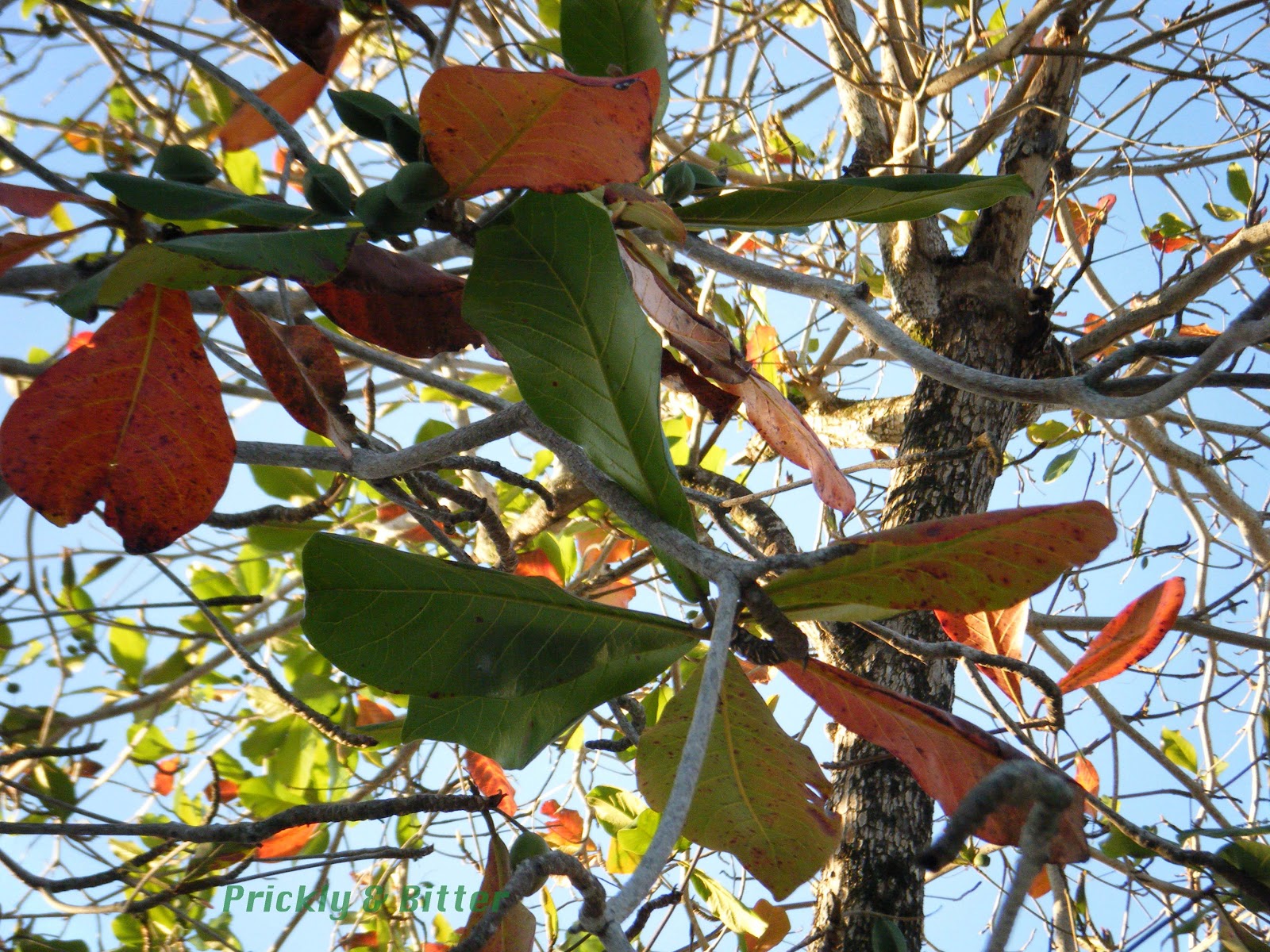
The shedding tropical almond tree


Species name: Terminalia catappa

Common name: Indian almond, tropical almond

Location: Dominican Republic

The tropical almond is a very large tree, reaching heights up to 35 meters tall, native to the warm tropical regions in Asia, Africa and Australia. This particular species (that common name applies to 6 or 7 species in the genus; one of the reasons why I'm not a big fan of common names) is native to India and surrounding area, reaching as far east as China and Thailand. It is planted extensively throughout the New World Tropics (the Caribbean Islands, and Central and South America) as an ornamental species. It was discovered that the seeds of the tree are edible once the very tough outer husk is removed from the fruit, and when this husk is added to fermenting sugar cane an amaretto-like beverage can be produced (and hence the name "tropical almond," not just for the appearance of the fruit which are pointed to by the pink arrow in the third photo).

I have seen this tree on every single one of my tropical vacations; I'm pretty sure I've even seen it planted in Florida. Normally to see an ornamental tree or shrub species everywhere isn't uncommon, since if it's pretty in one area it's likely going to be pretty in another area. But to introduce a species that sheds its leaves during the peak tourist season, as well as its fruits that often attack unsuspecting tourists, is just plain silly to me. You've got all of these thousands of species of native trees to tropical North and South America that keep their leaves all year round; why not use one of those?! For the entire week there were people pulling leaves out of the pool, since during the summer months this is a wonderful shade tree and so logically is planted in areas where shade is desirable.

Medicinally, this plant has been very popular in native herbal medicines around the world for a wide range of treatments: it has reported use in India and Suriname for dysentery and diarrhea, and in Taiwan for liver disease. Interestingly, this plant has gotten a lot of press recently because of the reported benefits it might have in fighting cancer. There are some chemicals in the leaves that reportedly act as antioxidants, but there have been no studies that have shown that this plant has any effect on cancer cells, either in the body or in petri dishes (from any species!). Should someone "prescribe" this plant to someone who has cancer or suggest they drink a tea prepared from the leaves it is highly unlikely to result in death, but don't expect it to melt the cancer cells out of the body. So far it's a fake cancer cure at best. It does have some proven health benefits, but only for a very narrow portion of the world's population. In a study that examined bark extract from this tree they noted that it has the ability to kill the plasmodium that causes malaria, even when this plasmodium displays resistance to all (or many) of the drugs we currently use to treat or prevent malaria. This is a very promising result for those who are diagnosed with (and who die from) multi-drug resistant malaria every year.

For those of you who are fish enthusiasts, you have likely been in close contact with this plant and just didn't realize it. The leaves can remove toxins from water, especially heavy metals that might be contaminating the water. They are used to condition water before it is prepared for fish inhabitants in aquaria. Also, it has shown promising activity in preventing the spread of water molds that grow on fish (usually called "Ick"), effectively reducing disease in fish populations. If you've ever purchased a betta fish (sometimes called a "Siamese Fighting Fish" in pet stores), you've likely purchased a fish that was treated with these leaves as preventative measure to ensure it gets to you, the consumer, disease-free.

Wednesday, January 23, 2013

POM Wonderful?


Species name: Punica granatum

Common name: pomegranate

Location: UWO Greenhouse

The pomegranate is native to Iran and Iraq, and has been used as a source of food and medicine by humans for centuries (arguably millennia). It is now widely grown as a tree crop around the world, and is also often now planted as an ornamental species both for its flowers (which are spectacular), the fruits (yum), and the bark (twisted and knotty; it's also quite spectacular-looking). There are even cultivars of pomegranate that were created in greenhouses specifically for their flowers, and the fruits don't even form. Seems like a waste of a pomegranate plant to me!

Pomegranates aren't just known for their edible seeds. Actually, it's not even the seeds that you consume! Like in some gymnosperms or cone-bearing plants, the seeds have a fleshy covering around them called an aril (you can read more about gymnosperms with an aril HERE and HERE). This aril is the red, juicy bit around the tough white seed. It's not that the seed is bad for you (unlike in the examples above, where the seed is deadly), it's just that the plant wants small animals to consume the aril with the seed inside, then poop the seed out intact. This gives the seed a nutritious medium to grow in, and it ensures that the seeds are dispersed away from the plant (unless the plant has the misfortune of having the animal leave the plant, then return to it and deposit the "organic matter").

For centuries, the pomegranate has been used as a medicinal plant, even before we started touting its "anti-oxidant" properties. Indian people are the most well-known for their use of pomegranates in Ayurvetic medicine going back at least a millennium (likely significantly longer than that). The rind, or the outside of the fruit (the "skin" that most people throw out) was used to make a type of tea that would be consumed to stop intestinal discomfort like diarrhea and problems related to dysentery. The juice and seeds of the plant would be consumed in a tonic to soothe sore throat and treat heart palpitations, as well as a treatment for heart attack. The seeds themselves would be consumed as an agent inducing abortion and as a contraceptive. The juice of the arils also has a reported use when applied topically on the skin to clear blemishes and help fade scars and rashes. There are a boatload of health benefits that herbal medicine practitioners in North America and Europe will tell you that the pomegranate has. First, it is claimed that it will reduce cholesterol and unblock arteries and veins in your heart (and reduce other risk factors for heart disease). Next, it's claimed that it will prevent the formation of cancer tumours due to its anti-oxidant properties, and will halt or reverse the growth of tumours that are already present. Lastly, it's claimed that pomegranate juice is an effective anti-bacterial chemical and will prevent infection in wound sites as well as preventing bacterial growth in your mouth when you consume it.

So what claims have been substantiated with actual evidence? None. There are suggestions, correlations, that pomegranate juice prevents (to some degree) plaque formation on your teeth by inhibiting bacterial growth. But remember, this is the bacteria in your mouth, not the bacteria on your skin. This doesn't mean it will prevent infection on your skinned knees. There is NO evidence that the anti-oxidants present in pomegranate juice will have any effect on your circulatory (or other) system. None. Don't get fooled by claims that there is evidence it does anything, because it doesn't. In fact, the leading brand of pomegranate juice, POM Wonderful, was sued for making illegal health claims on their product's label. The claims have since been removed. That being said, there are currently 32 enormous scientific trials underway in the United States testing the reported effects of pomegranates on different conditions. You can find all of the clinical trials on the National Institutes of Health website (NIH Clinical Trials), and what stage of the trial has been completed. None of them have published data (but it will be coming).

Monday, October 22, 2012

Resveratrol: the miracle drug from Japanese knotweed?


Species name: Fallopia japonica

Common name: Japanese knotweed

Location: Ontario

Again, from the common name of this species you should be able to discern that it's a non-native plant (native to Japan, China and Korea), and it is one that is highly invasive in disturbed habitats outside of northeast Asia. In North America, any place that it has been introduced it very quickly dominates, and takes many years of dedicated effort to eradicate it completely. Because of the intense underground network of rhizomes, complete eradication of the plant without use of chemical herbicides is nearly impossible; the next option is to dig up the earth and transport it away from the site (the easiest way to remove Japanese knotweed away from areas to be developed). This involves removing the top two to three feet of soil, a feat that is not possible for most natural or residential areas.

Despite this plant's bad rap, I find it one of the most fascinating plants we have in North America (but I would never plant it myself!). The growth rate of Japanese knotweed is outstanding; it can grow three to four METERS in one growing season from about May until October or November. That kind of growth in a temperate species in a temperate location is unheard of with very few exceptions. Why this plant isn't being investigated as a possible source of biofuel is beyond me (there's no reason why it couldn't be grown in a highly controlled way in a greenhouse or contained outdoor area, and genetically modify it to prevent the formation of seeds). The stems can grow to be so large and so strong that it is often mistaken for bamboo in the cut form (I doubt anyone would mistake it for bamboo when it's still standing in the ground; the leaves are very different! They are completely unrelated species).

In Japan, this plant is a traditional food crop, although not widely served in tourist areas so most foreigners are not exposed to it. The name for the food made from this plant (young shoots and leaves) is called "sansai," but the plant has numerous names based on different regions in Japan. When I was there in 2006, I was convinced to try it (in Hiroshima they call it "itazura") and boy oh boy. "Sour" does not even begin to describe it. I was offered a piece, I tried it, I didn't die, but I certainly wouldn't willingly inflict that kind of cheek-puckering pain on myself again! I didn't notice any reaction to it, but apparently the stems contain high levels of oxalic acid, the same chemical found in rhubarb leaves (and the reason why you should never, ever eat rhubarb leaves).

Today, Japanese knotweed is the most common source of the drug "resveratrol," which has an incredibly large list of reported benefits: life extension (unproven in humans, but works in mice and fruit flies), cancer prevention (no clinical trials in humans, but causes cancer cell death in cancerous red blood cells and smooth muscle like the lining of your intestines), cardioprotective effects (anecdotal evidence; all of the scientific evidence that showed resveratrol had any effect on preventing cardiovascular disease have been retracted because they were published fraudulently), antidiabetic effects (clinical trials have shown it lowers blood sugar), neuroprotective effects (has been shown to reduce plaque formation in the brains of non-human animals; no human studies), anti-inflammatory effects (prevents the progression of rheumatoid arthritis in rabbits; no human studies), antiviral effects (prevents the progression and spread of the herpes simplex virus and synergistically enhances anti-HIV drugs), effects on testosterone levels (increases sperm production in rats and increases testosterone production in mice; no human studies but is currently being sold as a bodybuilding supplement), and finally antimicrobial effects (shown to be ineffective at preventing growth of any microbe, bacteria or fungus, that it has ever been tested against). Should you choose to take resveratrol for any reason, make sure you consult your doctor.

If current medical uses weren't enough, there are also traditional medicinal uses of this plant. Both the Japanese and the Chinese in their traditional medicines used extracts from the leaves of Japanese knotweed as a laxative and to regulate bowel motility.

Thursday, May 31, 2012

Teeny Tiny Cranberries


Species name: Vaccinium oxycoccus (=Vaccinium microcarpum)

Common name: Northern cranberry, common cranberry, small cranberry

Location: Alaska (3rd picture from Wikipedia)

The saying "everything's bigger in Alaska" only seems to work for vegetables and mosquitoes. When it comes to other plants, they're considerably smaller due to the harsh growing conditions that they experience during the winter. Spruce trees that would normally grow to be about 50 feet tall within 100 years in the southern part of Canada might take up to 300 years to reach the same size in Alaska. The same can be said about cranberries, which are usually shrubby perennials (meaning they can live for many years). In Alaska, it is predominantly Small Cranberry that grows there (you can probably guess how it gets its common name), but even that doesn't begin to describe its size. Each one of those leaves is only about 0.5-1 cm long, and the fruit are about the same size. Anyone who's ever made their own cranberry sauce before at Thanksgiving or Christmas knows that's a pretty small cranberry!

There are three different species of cranberry, all of which are native to arctic environments around the world. The most economically important species of cranberry in North America, Vaccinium macrocarpon, is native to eastern North America, while the species pictured above is native to North America, northern Europe and northern Asia. Many pieces of literature also consider a third, separate species of cranberry that's native to Europe but I have indicated here that they are the same species (DNA sequencing suggests V. oxycoccus and V. microcarpum are the same species despite having slight morphological differences).

There are many health benefits that cranberries claim to have, but in general it's best to eat them because they taste good, not because they might help fight cancer. There has been the suggestion for many years that cranberries have very high antioxidant levels (which they do; some of the highest of any fruit regularly consumed in a North American diet), and a high level of oxygen radical absorbance capacity or ORAC. Oxygen radicals are a necessity of life if you're an animal, plant or fungus; there is no way not to produce them since they're a byproduct of energy production in cells. Despite this, oxygen radicals have the ability to mutate DNA and a very high oxygen radical stress on the body can lead to tumor formation. Unfortunately, foods with a high ORAC score have so far failed in any scientific trial to translate that ability into something that's biologically relevant. In other words, just because a cranberry has the potential to buffer the effects of oxygen radicals on the body doesn't mean that it actually does. If you're spending all of your disposable income on antioxidant extracts from various plants it's probably best to find something else to spend your money on until there is some solid scientific evidence that any of these supplements (or foods!) have an effect on the body that's tangible.

Friday, May 18, 2012

When is a Geranium actually a Geranium?


Species name: Geranium maculatum

Common name: Wild geranium, Spotted geranium, Wood geranium

Location: Ontario

I must say, I'm pleased to find out that this is a native plant! The wild geranium is native to eastern North America and the northeastern United States. There's an shockingly similar plant that's native to Europe called the Wild Cranesbill (this plant is also sometimes called the Wild Cranesbill in Canada and Woodland Geranium in Europe...no one said the common names of plants were any less confusing than the Latin names!), but it has slightly different shaped petals so I'm pretty sure this is the North American species. It's one of my favourite "weeds" in the garden that grows either by the pond (think small...it's more like a big permanent puddle than it is a "paddle around in a canoe and find frogs" pond) or by the fence at the back of the yard, but seemingly never in both places in the same year. This year seems to be a "by the fence year"!

Confusingly (no part of this blog post seems to be straight-forward...), this is only somewhat distantly related to the "garden geranium" that many North Americans and Europeans plant in their gardens right around this time of year. Those geraniums are in a genus named Pelargonium, and all of those species are native to South Africa (this refers to the southern part of the continent, not the country; just making sure we're sticking to the "confusing blog post" theme!). Both of these genera are part of the same family, the Geraniaceae. To compare Latin names to common names, the story doesn't get any clearer: species of Pelargonium are referred to as Storksbills, while species of Geranium are referred to as Cranesbills. In North America, we call one species of bird a stork and another a crane, while the reverse is true in Europe. So you can't even use the shape of the mature fruit to determine if it's a crane or a stork bill, because it would depend on your geography which one is which. I'll give you some time to think that one through... :)

Like many spring wild flowers, the wild geranium relies on a rhizome to accumulate nutrients during the fall to use for spring growth. The rhizome is high in tannins (the same chemicals that give dry red wine the "mouth pucker feel") and has been used in the medicinal practices of many indigenous peoples to treat diarrhea, canker sores, gum disease, thrush in babies, venereal disease, and what is probably throat cancer. It might be effective against some mouth-related ailments, but I doubt it's going to turn out to be the next great cure or treatment for cancer. I have been wrong before, so we'll have to wait and see! It has also been used to prevent infection around the site of the umbilical cord cut in newborns, as a component of anti-bacterial face wash, as an anti-itch paste, and to counter-act a "love medicine." This plant sure gets around!

Sunday, April 15, 2012

Bloodroot: a native North American wildflower

UPDATE: Mi compadre (aka my friend) Aaron alerted me to a very interesting experimental application of this plant in controlling another plant I blogged about, garlic mustard (see, even I'm learning things while writing this blog!). When bloodroot rhizomes are over-planted very densely where garlic mustard is prevalent (especially in shady areas) it can out-compete it for resources, and gradually it starts to die off. A fantastic idea of using native plant species in environments where they naturally thrive to eradicate invasive weeds. Brilliant!


Species name: Sanguinaria canadensis

Common name: Bloodroot, bloodwort, red puccoon root, pauson

Location: Ontario

Bloodroot is a species of native North American wildflower that grows from Nova Scotia to Ontario, and further south in the United States down to Florida and Mississippi. It flowers usually from March to May when the ground is still quite cold, and can grow in a wide variety of soil types (but preferring sandy soils, as in the first photo).

This plant was originally used in Native American medicine as a treatment for breathing problems and as an emetic. The roots were cut into small pieces, and then steeped in hot water like to make tea. The tea would then be consumed. I wouldn't recommend that today, since we now know that bloodroot is a poisonous plant, and topical application can lead to intense pain and scarring. The dark side of this plant's "medicinal" use today is as on of the USA's "187 cancer 'cures' consumers should avoid". It seems like if a plant produces any kind of effect on the body, someone will try to pass it off as a cure for cancer. For bloodroot's case, the roots have been made into a paste and sold as a cure for skin cancer and breast cancer, leading to massive deformation and pain in both circumstances. The lesson to be learned here is that just because it's "natural" doesn't mean it's good for you!

Today, this plant is still used for its roots, but not in a medicinal sense. The roots really are red, and really do "bleed" like you would expect from its name. This is of great use as a natural red dye for fabrics and plastics or as a paint (but again should not be added to food products because of the danger it poses).

The reproduction of this plant and the way that it relies on animals is one of the most fascinating in the plant kingdom. The fleshy surrounding of the fruit attracts ants, which carry away the seeds into their underground colonies. The ants will feed on the fruit, leaving the seed intact because it has a very tough and thick seed coat. The ants probably feel it's not worth the effort to try to break through the seed coat. Once ants are done with the fruit, they carry the seeds into their "waste rooms" in their colonies to discard of them. This puts the seeds in a nutrient-rich environment, where they will stay until the next spring. They grow out of the soil, and start their life anew. This type of symbiosis with ants for seed dispersal is called myrmecochory.

Despite this incredibly complex association with ants, most of the bloodroot plants you see in one area are not grown from seed. These plants also produce an underground storage tissue called a rhizome (think of ginger; that's a rhizome) from which a new sprout can form and emerge above-ground. Every year the sugars the plant produces in the leaves are shuttled down to the rhizome where they are converted into starch and stored for the next year's growth. Every "patch" of bloodroot in an area are produced from this underground rhizome network, not from seeds. Since the plant is then no longer relying on external inputs for growth (instead breaking that starch back down into sugar and using that to grow), they can grow much earlier in the season than other plants around it.